







Copyright © 2025 Fluent Conveyors, LLC. All right reserved
Fluent Conveyors logo is a registered trademarks of Fluent Conveyors, LLC. Serial Number 97664258 Registered on Dec. 12, 2023

Fluent Conveyors supplies rivet splice kits for medium- to heavy-duty conveyor belt applications. Rivet hinged systems provide easily separable splices for belt access and maintenance, while rivet solid plate systems deliver sift-free splices for high-tension operations.

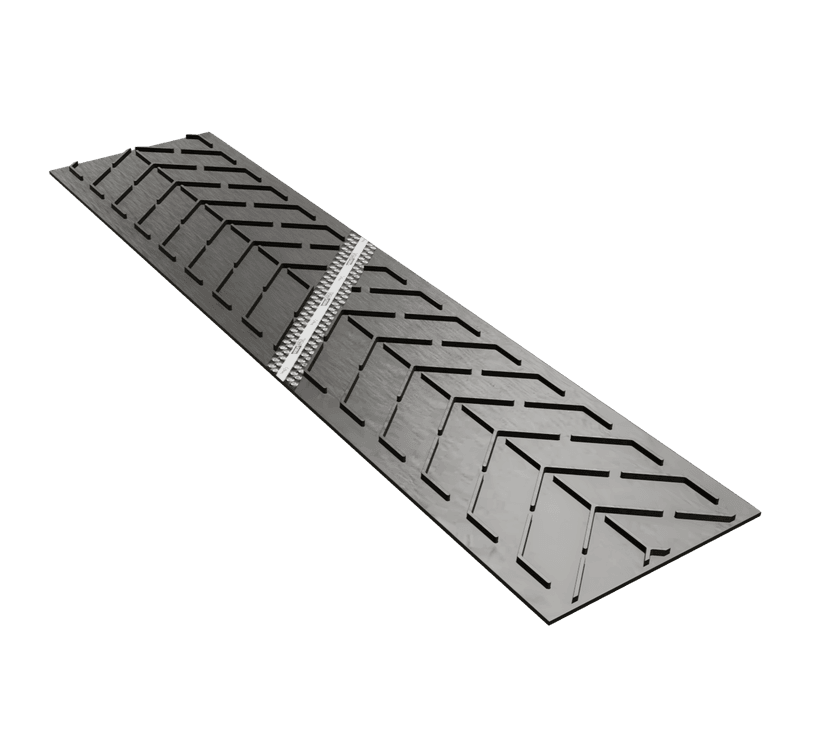
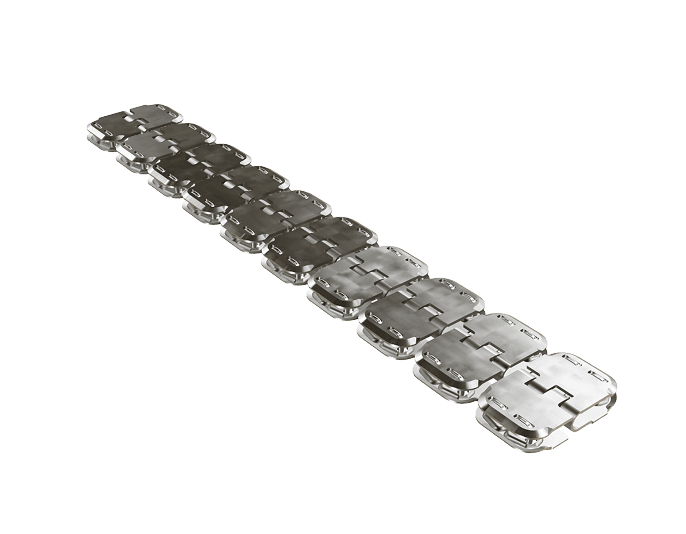
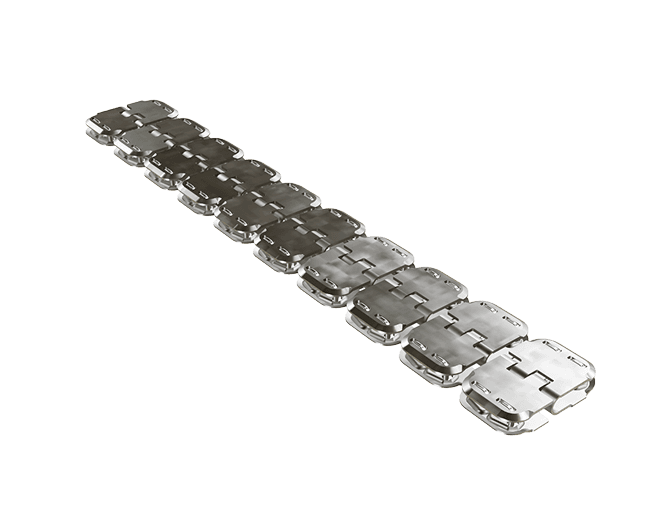
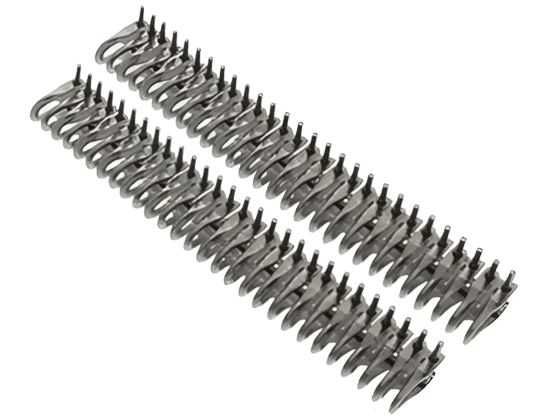
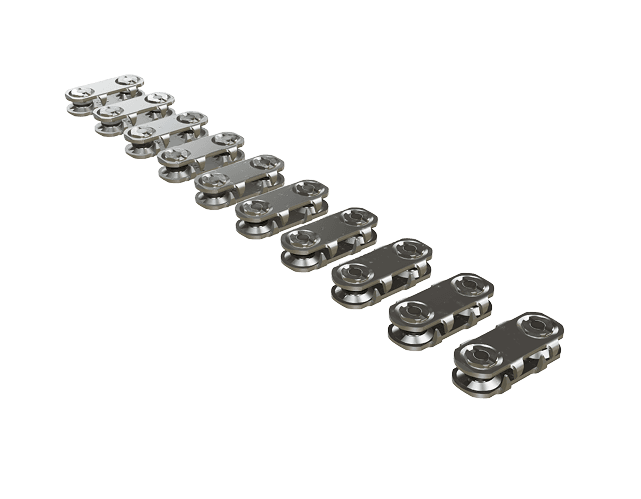
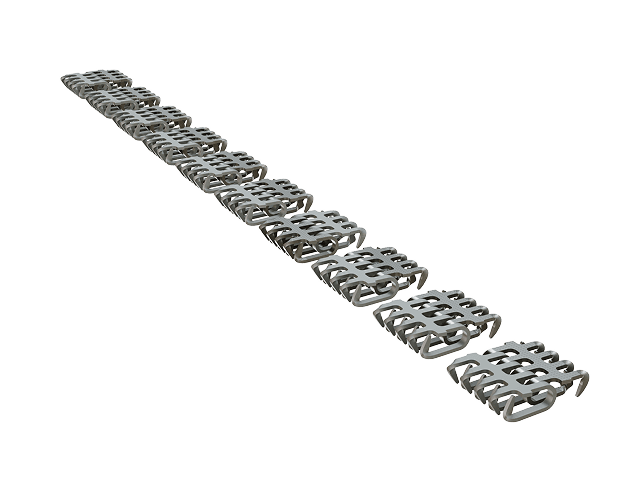
in demanding applications.
Match the fastener PIW rating to your belt's rated strength, measured in pounds per inch of width (PIW). The fastener rating should equal or exceed the belt rating to prevent splice failure under load.
Never operate mechanical fasteners beyond their recommended PIW ratings. For high-tension applications, verify that operating tension stays within the specified limits for your pulley diameter configuration.
Measure belt thickness, including top and bottom covers. If fasteners will be countersunk (skived), measure the belt thickness after skiving; the reduced thickness determines fastener and rivet size selection. Use the belt thickness ranges in the specification tables to narrow your fastener size options.
Minimum pulley diameter specification prevents excessive hinge stress and premature fastener wear. Rivet systems accommodate moderate to large pulley diameters compared to lighter-duty staple splice kits or lacing splice kits.
Don’t use on pulleys where the belt makes less than a 90° wrap. When using self-cleaning wing-type pulleys, subtract 20% of the overall diameter to calculate the effective minimum pulley diameter.
Never install fasteners on pulleys smaller than specified.
Both systems accommodate rubber-plied and PVC solid woven belting with comparable PIW ratings in overlapping size ranges. The primary decision criterion is whether belt accessibility or splice strength takes priority for your application.
Rivet hinged systems provide easily separable splices for applications requiring regular belt access:
Belt removal for cleaning or inspection without splice damage
Belt extension or shortening in the field
Worn belts unfit for vulcanized splices
Applications where reusable splices reduce long-term costs
Lower profile for maximum scraper compatibility
Rivet solid plate systems provide maximum strength and sift-free operation:
High-tension applications requiring maximum splice strength
Fine material conveying where splice leakage causes problems
Straight warp belts where rivets separate fibers instead of displacing carcass
Troughed belt conveyors requiring plate compression
Applications prioritizing splice strength over accessibility
Choose fastener and rivet materials compatible with your operating environment:
Steel (standard): Plated for rust and corrosion resistance, suitable for most indoor and dry applications. Standard material for rivet hinged and rivet solid plate systems provides an excellent cost-to-performance ratio.
300 series stainless steel (rivet hinged): Non-rusting stainless with abrasion resistance, acid resistance, chemical compatibility, and extra resistance to magnetic attraction. Ideal for food processing conveyors, washdown environments, corrosive atmospheres, and high sanitation requirements.
430 series stainless steel (rivet solid plate): Corrosion-resistant stainless steel for outdoor applications, chemical exposure, and moderate corrosive environments. Available for BR system fasteners and rivets.
MegAlloy (rivet hinged): Specialized alloy for extreme abrasion applications requiring maximum fastener life. Available for select R2, R5, and R5-1/2 sizes.
RustAlloy (rivet hinged): Corrosion-resistant alloy for outdoor applications and coastal environments with salt exposure.
Everdur (rivet solid plate): Bronze alloy providing spark-free operation for grain handling, explosive atmospheres, and applications requiring non-ferrous materials. Available for BR6 fasteners in select sizes.
Not all materials are available for all fastener sizes. Consult Fluent for material availability by size.
The installation method affects downtime, field serviceability, and labor requirements.
Hammer installation provides portable, equipment-free installation with minimal tooling investment. Manual rivet driving works for occasional splicing or remote field repairs. Installation time ranges from 60–120 minutes, depending on belt width, fastener size, and operator experience.
Power installation speeds installation by up to 33% with consistent rivet driving and reduced operator fatigue. Power options include:
MSRT and SRTA tools (rivet hinged): Aluminum multiple-rivet applicator tools for R2, R5, R5-1/2, and R6 sizes
MBRT tools (rivet solid plate): Aluminum multiple-rivet applicator tools for BR6 and BR10 sizes
Pneumatic rivet drivers: Single-rivet drivers with powerful trigger pull for faster, more consistent installation
Electric rivet drivers: Powered rivet driving for production environments and frequent installations
Rapid Loader™ collated rivet strips further reduce installation time by eliminating individual rivet handling—load 20 rivets at once into multiple guide blocks.
For production facilities with frequent splice installations, power installation tools and collated rivet strips provide significant time savings and improved splice consistency.
Rivet systems work with rubber-plied and PVC solid woven belting:
Rubber-plied belts: Both rivet hinged and rivet solid plate systems. Self-setting rivets work between fibers without severing them, maintaining belt strength.
PVC solid woven belts: Both rivet hinged and rivet solid plate systems. Solid construction accommodates rivet penetration without carcass damage.
Straight warp belts: Rivet solid plate systems particularly well-suited. Rivets separate the fibers instead of displacing the carcass, preserving belt structure.
High-strength synthetic carcass belting: Rivet solid plate systems designed specifically for modern high-tension synthetic belts.
Worn belts unfit for vulcanized splices: Both rivet systems provide mechanical splicing without heat-based bonding, enabling splice installation on belts with degraded covers or moisture exposure.
For belt types requiring lighter-duty mechanical fastening, try Alligator splice kits with lacing, staple, or rivet variants up to 300 PIW.
Designed to support efficient installation and reliable conveyor belt maintenance applications.

Metal fastener strips (rivet hinged) or top and bottom plates (rivet solid plate) that secure to each belt end. Strip or plate width matches belt width; quantity and configuration vary by system type and fastener size.
Typical kit contents:
Rivet hinged kits (SR™): 2 fastener strips per splice, ordered by belt width
Rivet solid plate kits (BR™): Top and bottom plates per splice, ordered by belt width
Fastener strips and plates feature Scalloped Edge® design for reduced profile and extended splice life.

Rivet hinged systems: Hinge pin cut to belt width joins the two fastener strips together, allowing the belt to flex around pulleys. Pin options include:
NC (nylon-covered steel cable): Standard hinge pin with nylon covering for reduced wear
AC (armored cable): Bare steel cable for standard applications
AC6 (heavy armored cable): Larger diameter cable for heavy-duty applications (R5-1/2, R6, R8, R9 sizes)
Hinge pins feature lugs that engage fastener loops, reducing the possibility of hinge pin migration during belt operation.
Rivet solid plate systems: No hinge pin required. Top and bottom plates compress the belt material with rivet attachment.

Self-setting rivets with pre-assembled pilot nails provide maximum resistance to pull-out. Rivets work between belt fibers without severing them, leaving belt strength intact.
Rivet sizing by belt thickness: Rivet size selection depends on belt thickness after skiving. Use the rivet selection charts provided with kits to match belt thickness to the appropriate rivet size.
Color-coded rivets provide easy size identification: Gray (AA, SRA), Red (A, SRB), White (B), Blue (C, SRC), Orange (C/D, SRC/D), Green (D, SRD), Purple (E, SRE), Yellow (F, SRF), Black (G, SRG)

Tool availability varies by kit configuration and purchase options. Complete installation tool kits can include:
Belt preparation tools:
Belt cutters: Clipper 845LD for belts up to 1/2" thick, 900 Series for belts up to 1-1/2" thick
Belt skivers: Rough top belt skivers, belt grinders with carbide for clean cover removal
Rivet installation tools:
Manual hammer installation (1 lb hammers)
MSRT and SRTA aluminum application tools (rivet hinged systems)
MBRT aluminum application tools (rivet solid plate systems)
Pneumatic single rivet drivers
Electric powered rivet drivers
Hydraulic multi-rivet driving systems (high-production installations)
Guide blocks and accessories:
Multiple guide blocks for Rapid Loader™ collated rivets
Single rivet guide blocks for individual rivet installation
Silicone lubricant for rivet driving
Installation instruction manuals
Consult Fluent for tool recommendations based on fastener size, installation frequency, and production requirements.
Square the belt ends perpendicular to the belt edges using a straightedge, squaring guide, or precision belt cutter. Accurate belt squaring prevents tracking problems after splice installation.
Clean the belt surface and remove contamination, oil, or debris that could interfere with fastener seating. Mark fastener placement using templates or measuring guides for uniform spacing across the belt width.
Lock out and tag out conveyor power. Use belt clamps or belt lifters to secure the belt during installation. Verify adequate working space and lighting for the installation crew.
Gather required tools: fastener strips or plates, rivets (individual or Rapid Loader™ collated strips), hinge pin (rivet hinged systems), installation tools (hammer or power drivers), belt preparation equipment (cutters, skivers), and safety equipment.
Most rivet systems require skiving (removing a portion of the top or bottom belt cover) to achieve proper fastener seating and meet belt thickness specifications after skiving. Measure skiving depth requirements based on fastener size and belt thickness.
Use belt skivers or belt grinders with carbide attachments for quick, clean cover removal. Follow system-specific skiving instructions provided with your fastening system.
Verify the skived belt thickness matches the belt thickness range for your selected fastener size. Improper skiving depth causes rivet seating problems and reduces splice strength.
For countersunk installations, skive belt covers to accommodate fastener profile and create flush splice surfaces. This reduces fastener exposure to belt cleaners and conveyor components.
Install fasteners into prepared belt ends using the appropriate installation tool or method. Apply uniform pressure across the belt width for consistent rivet penetration and seating.
Rivet hinged installation (hammer method):
Position fastener strip against belt edge
Drive rivets through fastener holes and belt material using hammer
Self-setting rivets compress and form heads on both sides of the belt
Work across belt width for uniform rivet seating
Repeat for other belt end
Typical installation time: 60–120 minutes
Rivet hinged installation (power method):
Load Rapid Loader™ collated rivets into MSRT or SRTA guide block
Position fastener strip and guide block against belt edge
Drive rivets using pneumatic or electric rivet driver
Move guide block across belt width, loading new rivet strips as needed
Repeat for other belt end
Typical installation time: 40–80 minutes
Rivet solid plate installation (hammer method):
Position bottom plate beneath belt, top plate above belt
Drive rivets through top plate, belt, and bottom plate using hammer
Self-setting rivets compress plates against belt and form heads
Use staggered rivet pattern for uniform load distribution
Verify all rivets are fully seated and heads properly formed
Typical installation time: 60–120 minutes
Rivet solid plate installation (power method):
Position plates and load Rapid Loader™ collated rivets with washers into MBRT guide block
Drive rivets using pneumatic or electric rivet driver
Work across belt width using staggered pattern
Verify plate compression and rivet head formation
Typical installation time: 40–80 minutes
Pneumatic rivet drivers speed installation by up to 33% compared to hammer application.
Rivet hinged systems only: Insert the hinge pin through the fastener hinges on both belt ends, joining the splice. Notch the belt at the hinge pin entry point for easier insertion. Verify pin retention—lugs on the hinge pin should engage fastener loops to prevent hinge pin migration during belt operation.
All systems: Inspect splice for uniform fastener seating, correct alignment, and full belt width engagement. Check for:
Square belt ends with no angular misalignment
Consistent rivet penetration depth and head formation across the belt width
Proper hinge pin seating and retention (rivet hinged systems)
Flush plate compression with no gaps (rivet solid plate systems)
Adequate clearance for the smallest pulley diameter in the system
No protruding rivet heads or fastener edges that could damage material or equipment
Test the splice under low tension before returning the conveyor to full operation. Monitor splice performance and belt tracking during initial operation. Verify belt tracking and adjust take-up tension if needed.
For rivet hinged systems, verify that the hinge pin does not migrate during operation. Install hinge pin retaining collars if needed for your application.
If you're shopping for splice kits because your belt is damaged, worn, or reaching end of life, a complete replacement belt may be more cost-effective than field splicing. Fluent supplies custom replacement conveyor belts cut to your specifications with factory-installed mechanical or vulcanized splices.
When you replace your belt with Fluent, you get:
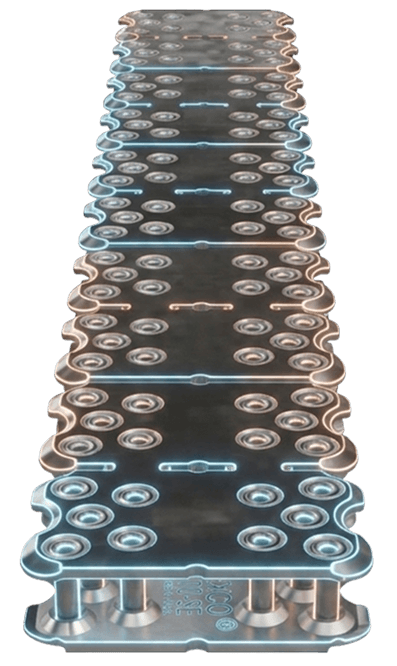
Professional splice quality with controlled conditions and precision equipment
No field splicing time required
Longer splice life compared to emergency field repairs
Available with mechanical fasteners or vulcanized joints
Engineering support for belt selection and splice type recommendations
Contact us about replacement belts with factory splicing. We'll help you determine whether a splice kit or complete belt replacement provides better value for your application. We can also match you with a regional dealer that can handle the install and provide ongoing support and maintenance.

Fluent Conveyors designs and manufactures conveyors for recycling, waste management, and other heavy industries. We understand how mechanical fasteners perform because we install them on our custom conveyor belts every day.
Our engineering team provides technical guidance on splice kit selection, belt compatibility, and installation procedures grounded in hands-on conveyor manufacturing experience. Whether you need replacement splice kits for existing equipment or specifications for a new custom conveyor, contact us about your application, and enjoy working with the conveyor experts.