









Installation
[Auto-populate 1 related page.]


Copyright © 2025 Fluent Conveyors, LLC. All right reserved

Fluent Conveyors logo is a registered trademarks of Fluent Conveyors, LLC. Serial Number 97664258 Registered on Dec. 12, 2023



Heavy-duty ripstop belts for mining, aggregates, steel, and recycling conveyors. We can match the carcass, breaker type, cover compound, and dimensions to your application. Available for Fluent conveyors and retrofit installations.
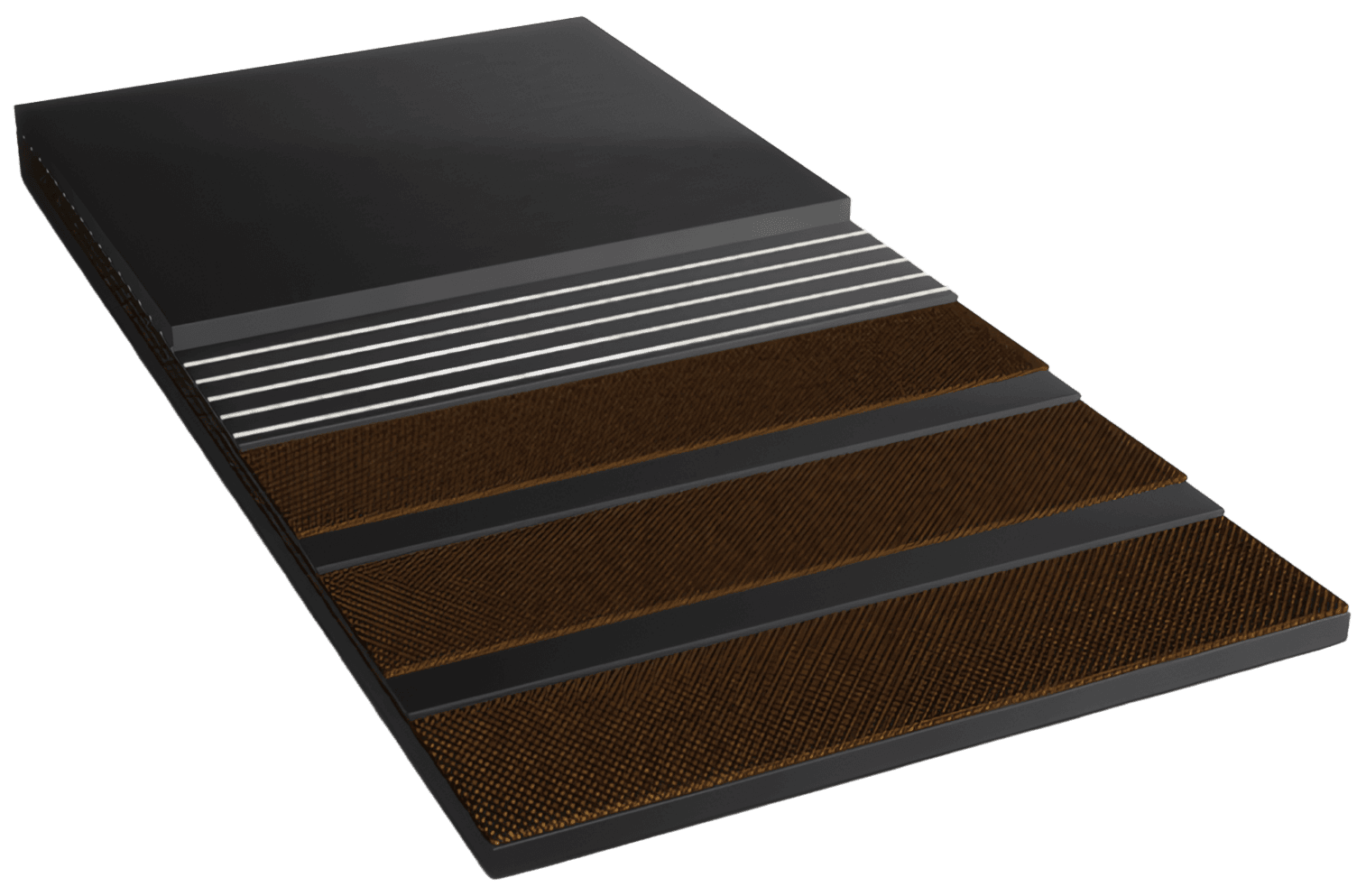

Engineered for durability and tear resistance, ripstop belts provide reliable performance, extended service life, and consistent material handling in demanding industrial environments.
EP (polyester/nylon), polyester, nylon, steel cord; multi-ply fabric carcasses standard in 2-ply, 3-ply, 4-ply, and 5-ply configurations
Fabric breaker (woven synthetic plies arranged crosswise), steel breaker (transverse steel weft embedded in top cover), steel wire mesh, or no breaker for steel cord ripstop where the cord layout itself provides the primary reinforcement
SBR (high abrasion resistant), MOR (moderately oil resistant), SOR (super oil resistant), HR (heat resistant), FR (flame retardant), white FDA, neoprene, nitrile, PVC; other DIN-standard compounds available on request
3/16"–1/2" (4.8–12.7 mm) standard; thicker on request for high-impact and shredder infeed applications
1/16"–1/4" (1.6–6.4 mm) standard
220–500+ PIW for fabric and steel breaker constructions; ST-grade steel cord ratings higher on request
24"–96" standard; wider custom widths available with linear splicing
-40 °F to 225 °F, depending on cover compound; HR compounds for higher continuous and peak temperatures available on request
Smooth top, chevron top, multi-chev, rough top, integrally molded cleats, longitudinal guide ribs for tracking stability on shredder profiles
Mechanical (alligator hinged and tooth, bolt plate, rivet plate, super screw); vulcanized (step hot, finger, longitudinal); selection depends on PIW rating, breaker type, and operating conditions
Corrugated sidewalls, integrally molded cleats, longitudinal guides, oil-resistant compound, flame-retardant compound, heat-resistant compound, food-grade compound
Scales with PIW rating and breaker type; typical 16"–24" head pulley for fabric and steel breaker ripstop, larger for steel cord ripstop at full tension
Store indoors; best if installed within 1 year of receipt
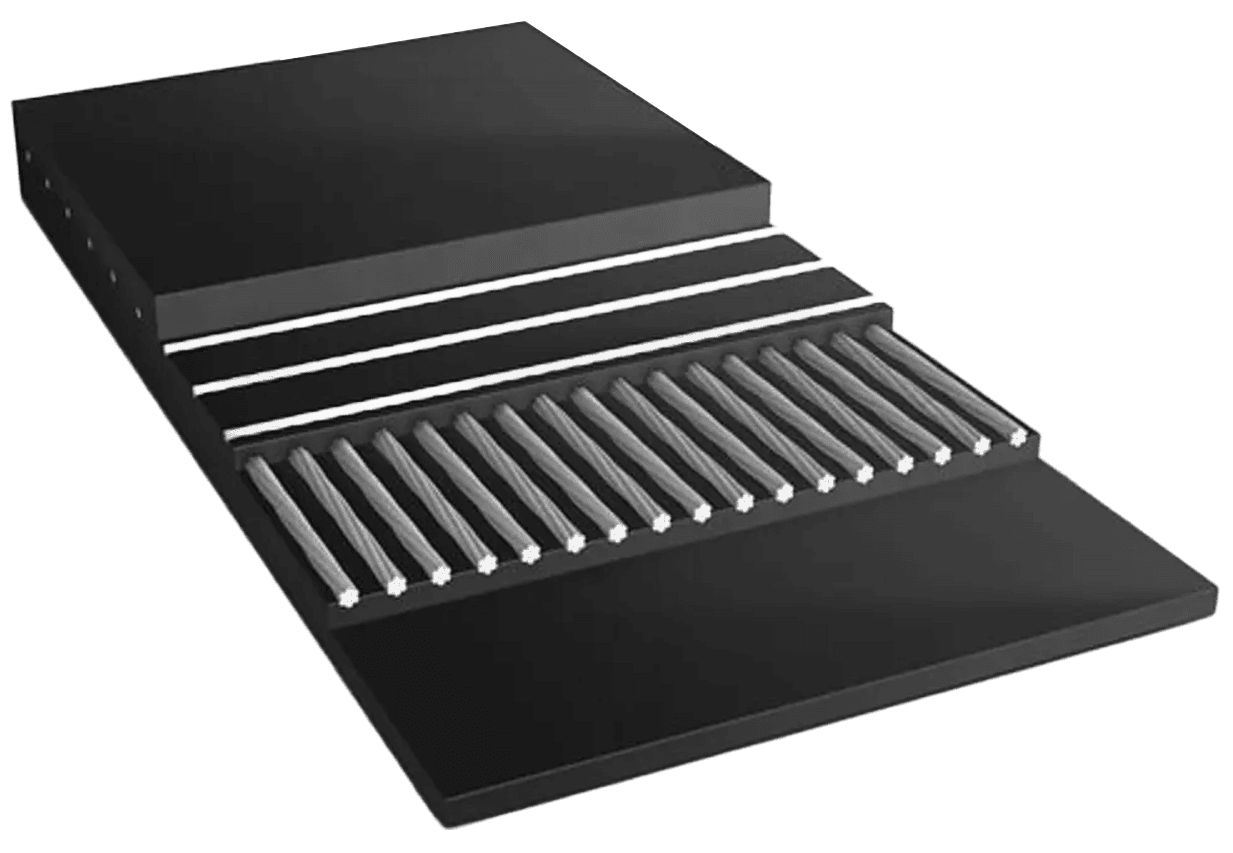
A steel cord carcass paired with a ripstop breaker ply for long-distance, high-tension conveying. Used where belt length, lift, and tonnage require the tensile rating of steel cord, and the operating environment presents rip risk.
Best for: Mining, ports, power plants, and cement.
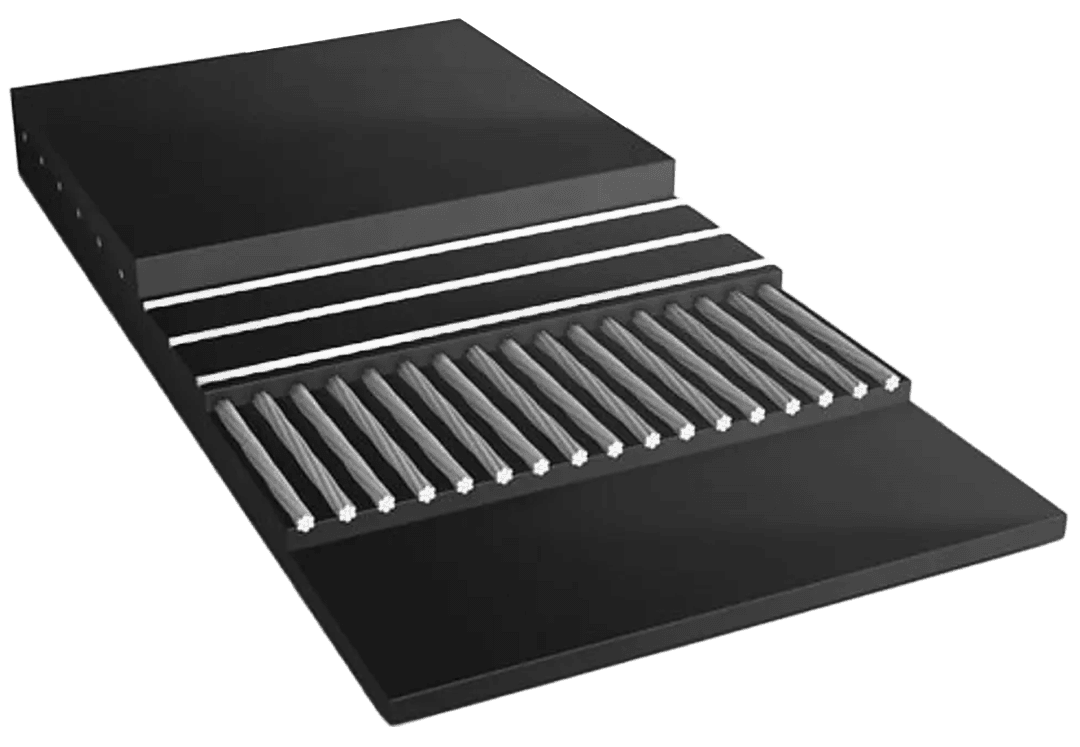
dependable conveyor reliability.
Ripstop is a belt construction modification. A ripstop belt is any conveyor belt built with an added reinforcement layer positioned to interrupt the propagation of a rip once damage has started. The carcass beneath the breaker can be EP fabric, polyester, nylon, or steel cord, and the cover compound and surface profile are independent specification choices on top of that.
We supply ripstop belts for slider bed, trough idler, flat idler, trough slider bed, incline, and radial stacker conveyors.
Ripstop conveyor belts offer the following key features:
Exceptional puncture resistance
Superior tear resistance
Enhanced durability and extended service life compared to conventional belts
High tensile strength and resilience for long-distance conveying
Resistance to abrasion, impact, chemicals, and extreme conditions
Compatibility with many conveyor systems and types of machines (such as screening machines or milling machines)
Customizable design options to cater to specific requirements, belt widths, and pulley diameters
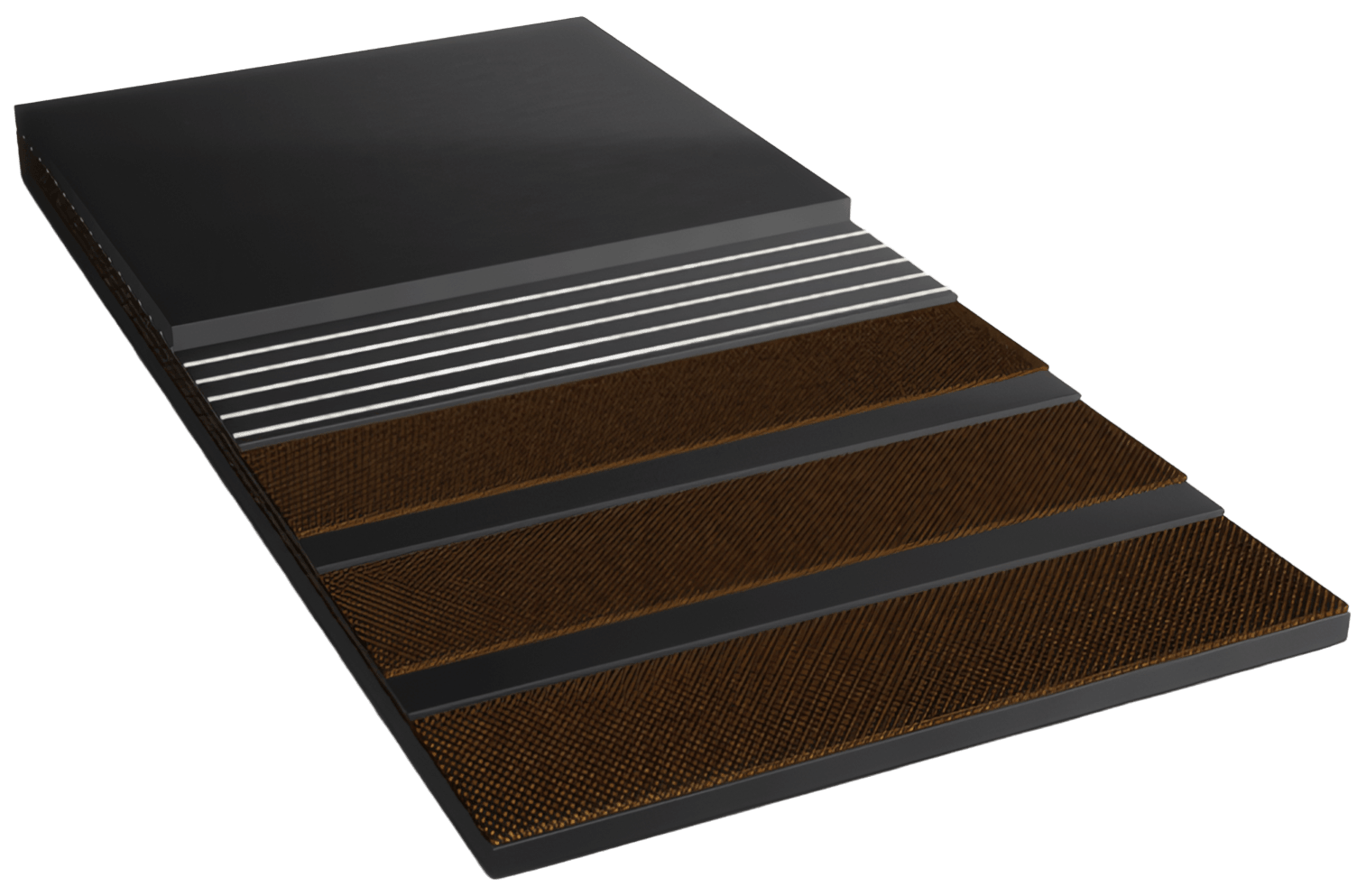
Ripstop conveyor belting is chosen for industry applications that require impact resistance, deal with sharp objects, or demand high belt tension, from the recycling industry to the steel industry.
Waste materials
Broken glass
Aggregates and bulk materials
Abrasive rocks
Slag and metal clippings
Recycled concrete
Construction and demolition debris
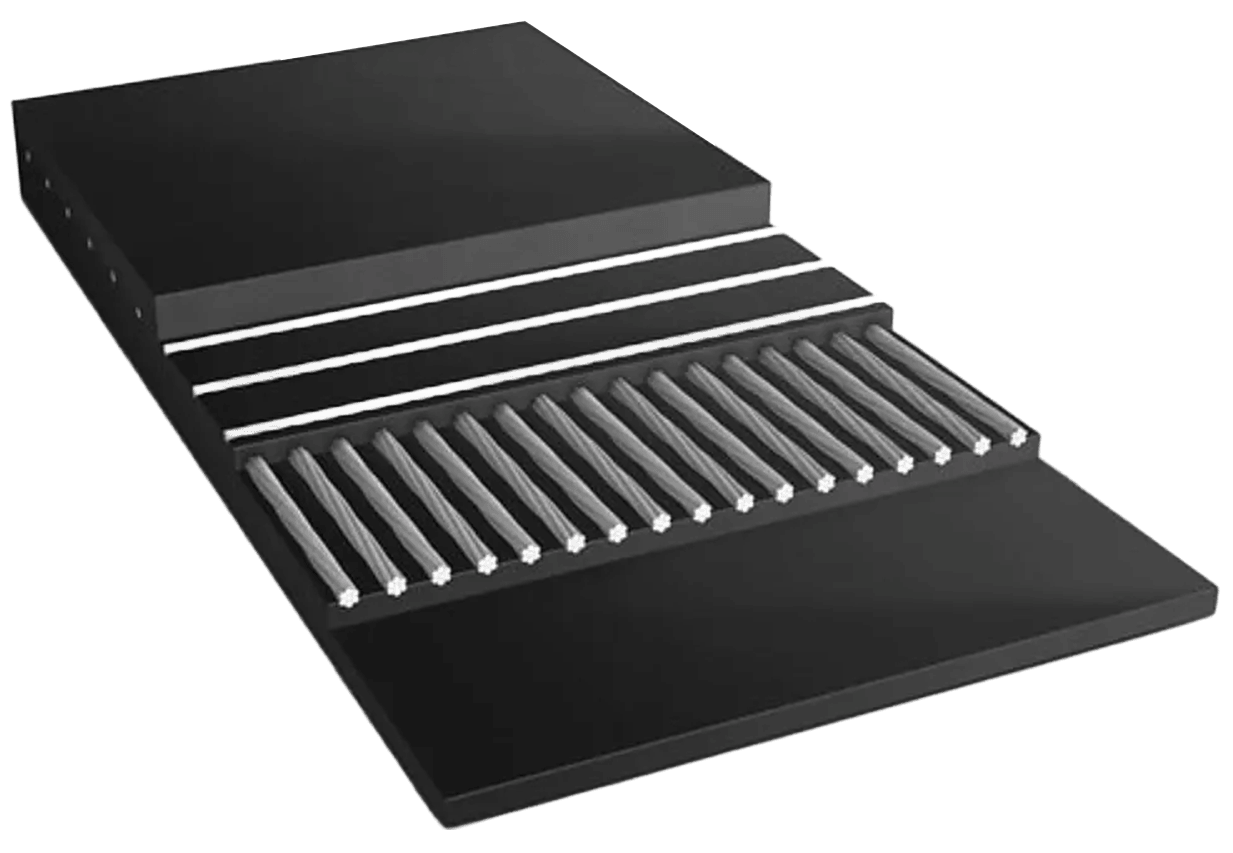

Ripstop performance comes from where the reinforcement is positioned in the belt cross-section and how it interacts with a trapped object under tension.

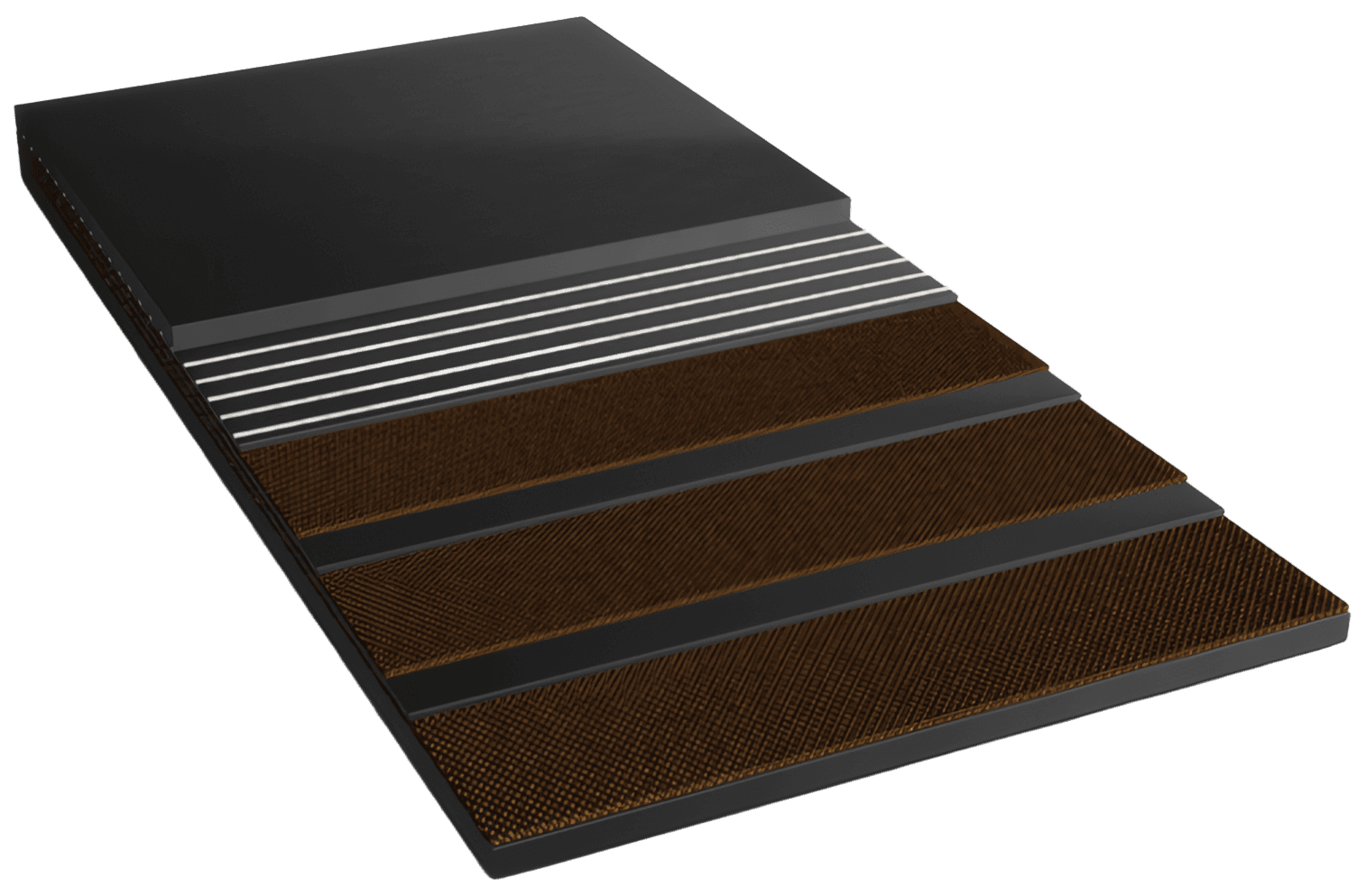
Breakers are most effective when positioned just beneath the top cover, close to the impact face but separated from the load-carrying cords or fabric plies. Some constructions use a second breaker beneath the bottom cover to protect against return-side damage.
Cross-rigid plies, monofilament, fiberglass, and steel breakers all add stiffness across the belt width. Transverse stiffness limits how far a tear can travel sideways before the belt structure arrests it.
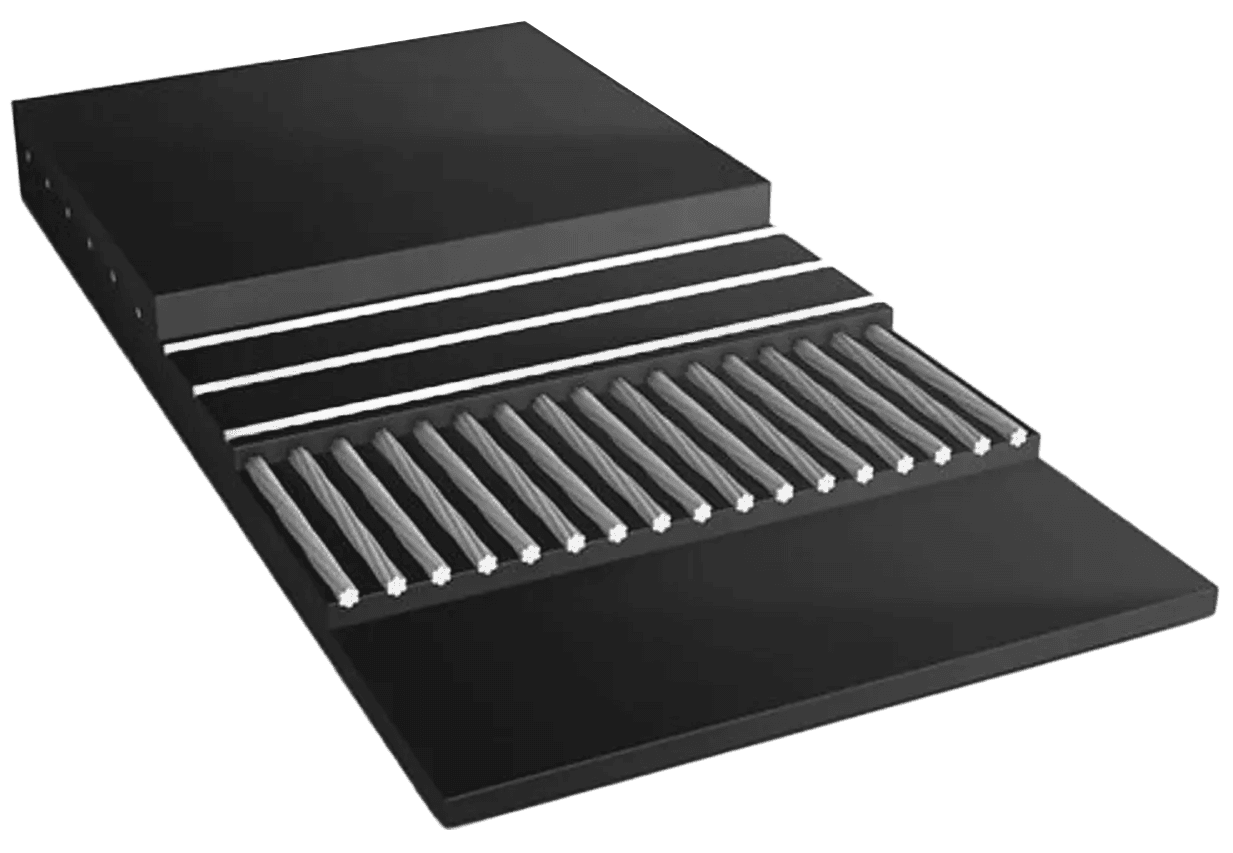
EP (polyester warp, polyester or nylon weft) is standard for fabric and steel breaker ripstop. Steel cord carcasses are reserved for high-tension, long-distance, or high-tonnage applications where the fabric carcass cannot meet the tensile rating.
The top cover protects the carcass and breaker from impact and abrasion. The bottom cover protects pulleys, idlers, and the return path. Top cover thickness is sized for the dominant wear mode; impact-driven applications run 3/8" or thicker top covers, while abrasion-driven applications optimize for compound hardness over gauge.
A ripstop breaker is not a substitute for correct loading geometry, chute design, or impact bed placement. The breaker limits the consequences of a foreign-object event; it does not change the rate at which those events occur. See our guide to what causes a conveyor belt to rip and types of conveyor belt damage for the full failure-mode picture
Ripstop belts can be ordered with chevron tops, multi-chev profiles, rough tops, integrally molded cleats, longitudinal guide ribs, and corrugated sidewalls. Surface profile and breaker type are independent specifications; a chevron-top ripstop belt with a steel breaker is a standard configuration for shredder infeed and incline applications carrying mixed material with sharp edges.
Collect the following specs for your ripstop belt. If you’re unsure of any detail, contact our engineering team, and we'll walk you through it.
Get in touch with us if you need help choosing the right belt size or choosing the right belt.
Belt width
Belt length (note whether endless or open-ended for field splicing)
Cover thickness, top and bottom
Tensile rating (e.g., ST 1000, ST 2000, ST 3150)
Cord construction (7×7, 7×19, or other)
Transverse breaker type (fabric or steel)
Cover compound grade (abrasion-resistant, heat-resistant, oil-resistant, fire-retardant, etc.)
Required certifications (MSHA, DIN W, ISO grade)
Corrugated sidewalls (height and spacing)
Cleats (pattern, height, spacing)
Wear pads (size, thickness, placement)
Belt replacement is the right time to evaluate related components or stock up on emergency replacements. We support our ripstop belts with all related standard wear conveyor parts:
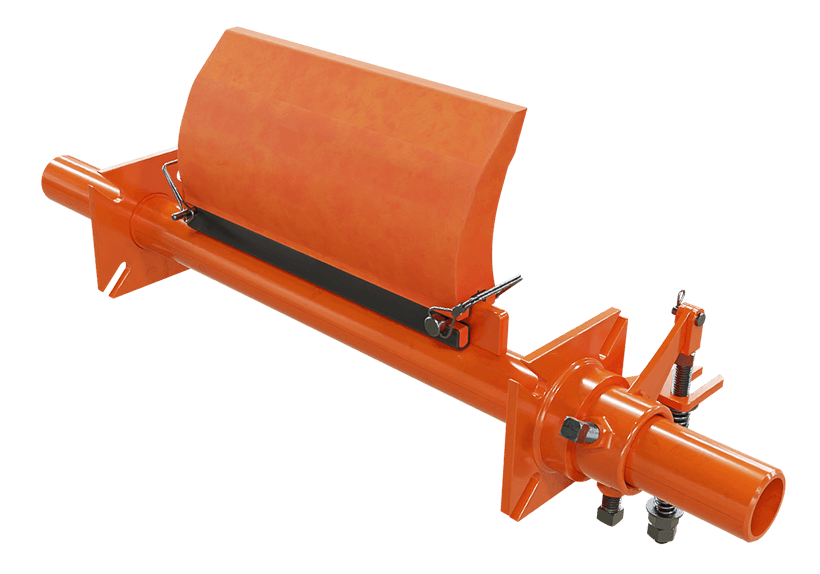
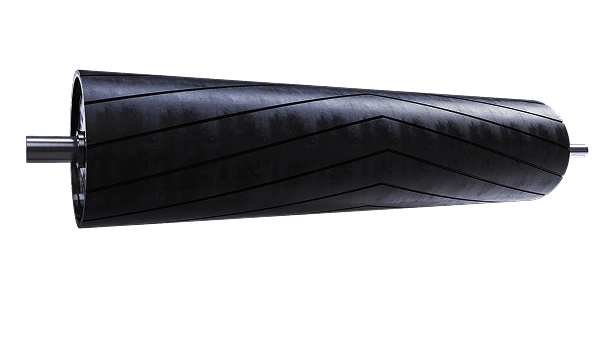
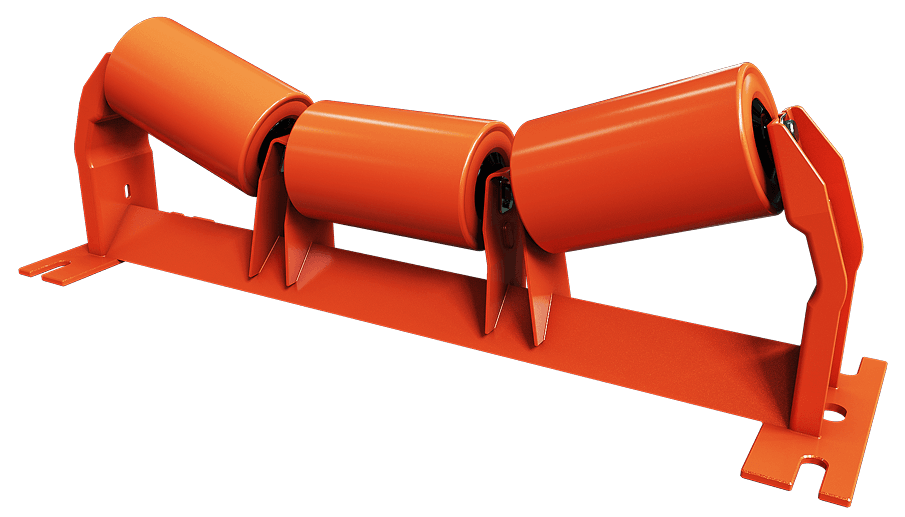
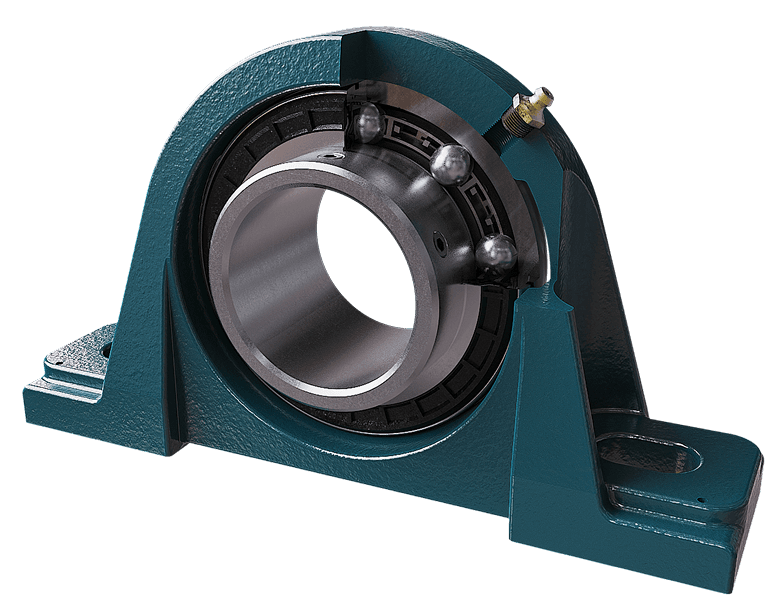
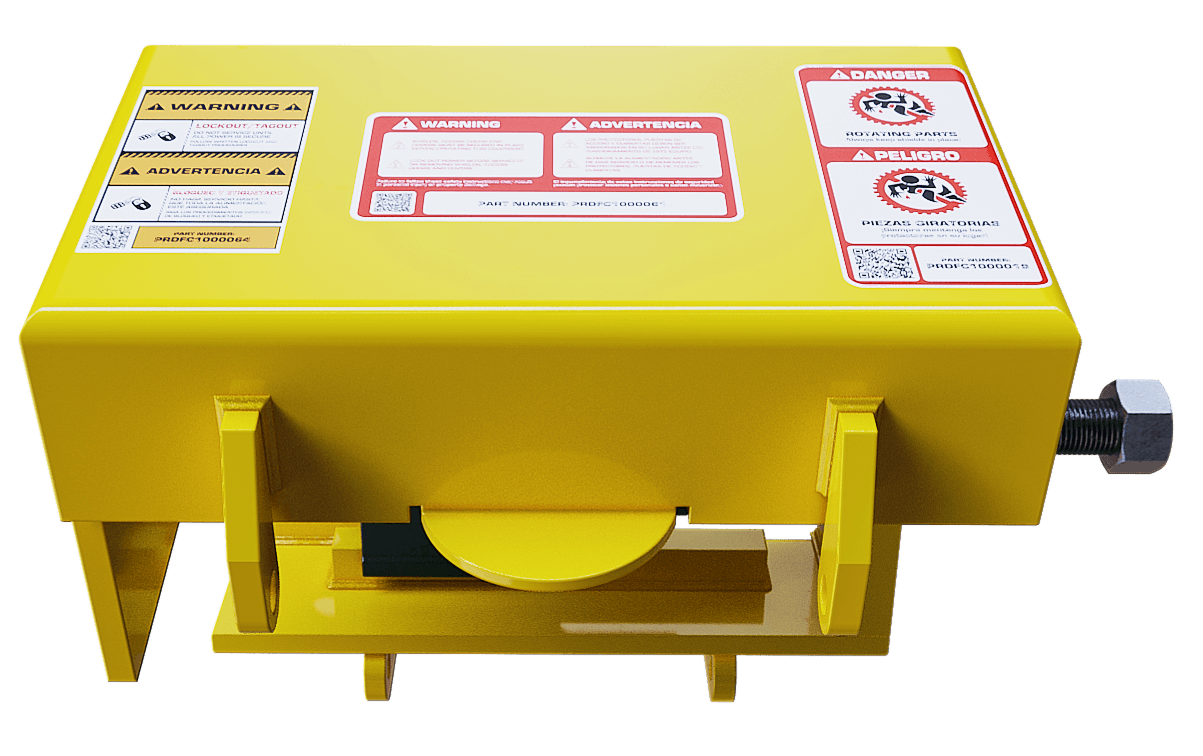
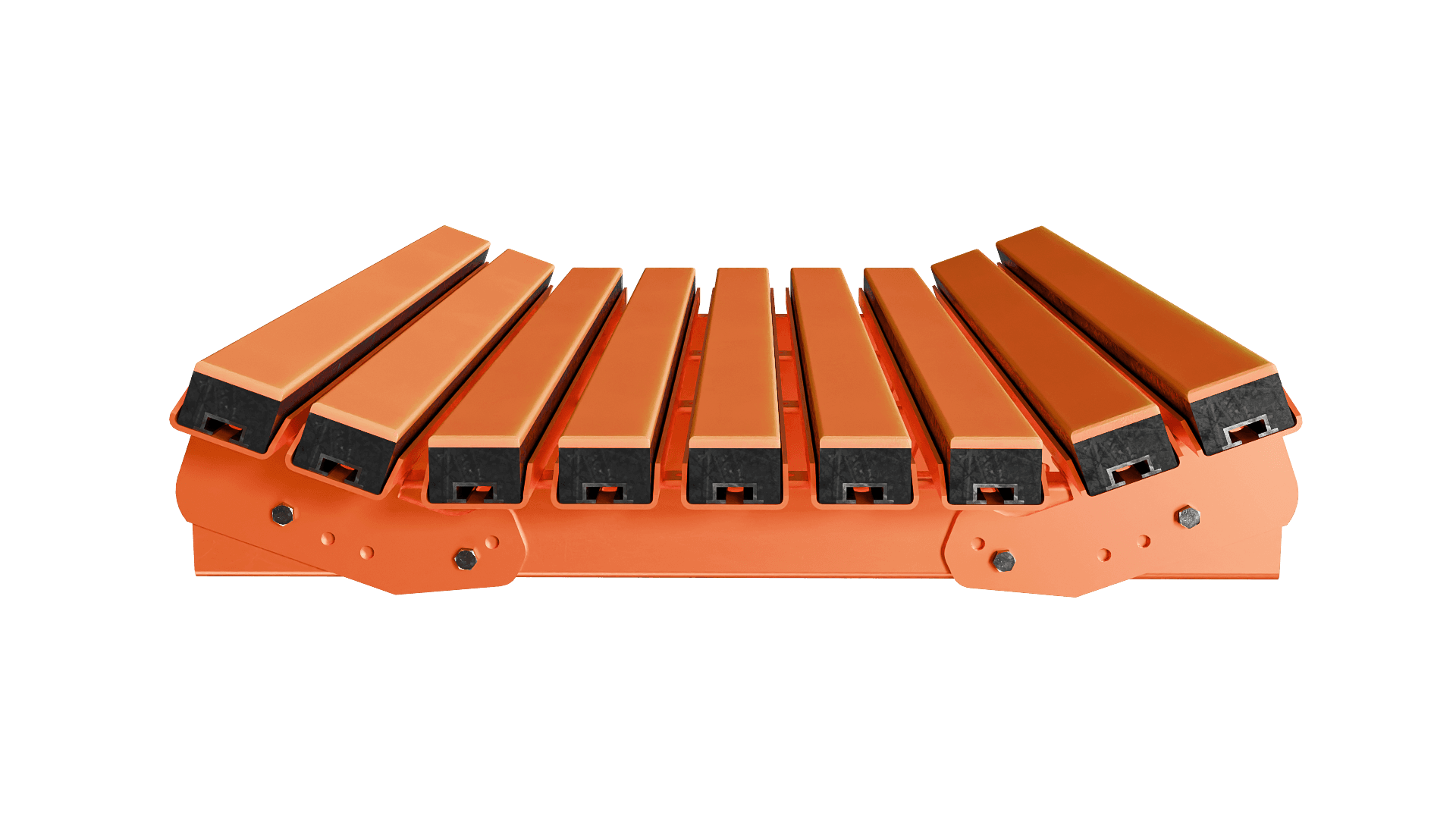
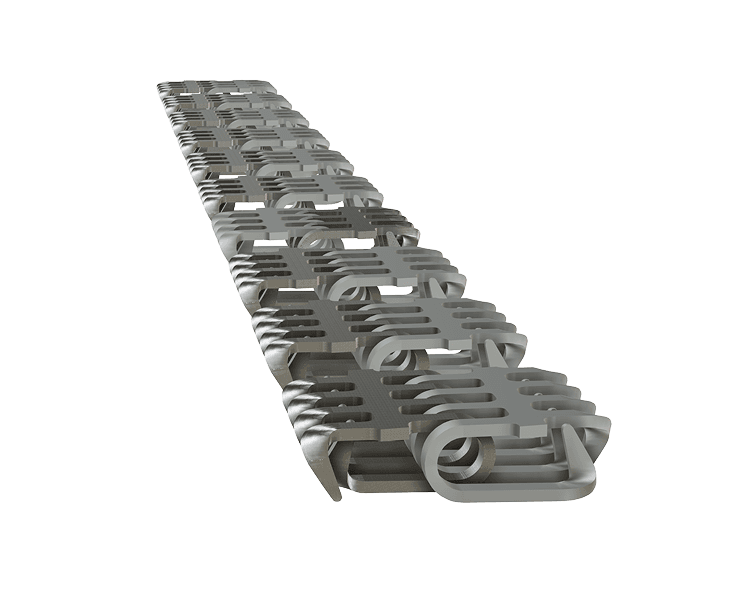

Fluent designs and manufactures custom conveyors. When you source through us, you're working with engineers who specify ripstop belts based on first-hand performance experience.
Steel and fabric ripstop belts in standard and custom belt widths
Abrasion-resistant, heat-resistant, oil-resistant, and fire-retardant cover compounds
Engineering support for belt rating, cover grade selection, and splice specification
Belts ship in 6–12 weeks, depending on spec; short stock lengths available faster
Ready to work with the experts?
[Auto-populate 1 related page.]
[Auto-populate 1 related page.]