





Copyright © 2025 Fluent Conveyors, LLC. All right reserved

Fluent Conveyors logo is a registered trademarks of Fluent Conveyors, LLC. Serial Number 97664258 Registered on Dec. 12, 2023


Copyright © 2025 Fluent Conveyors, LLC. All right reserved
Fluent Conveyors logo is a registered trademarks of Fluent Conveyors, LLC. Serial Number 97664258 Registered on Dec. 12, 2023

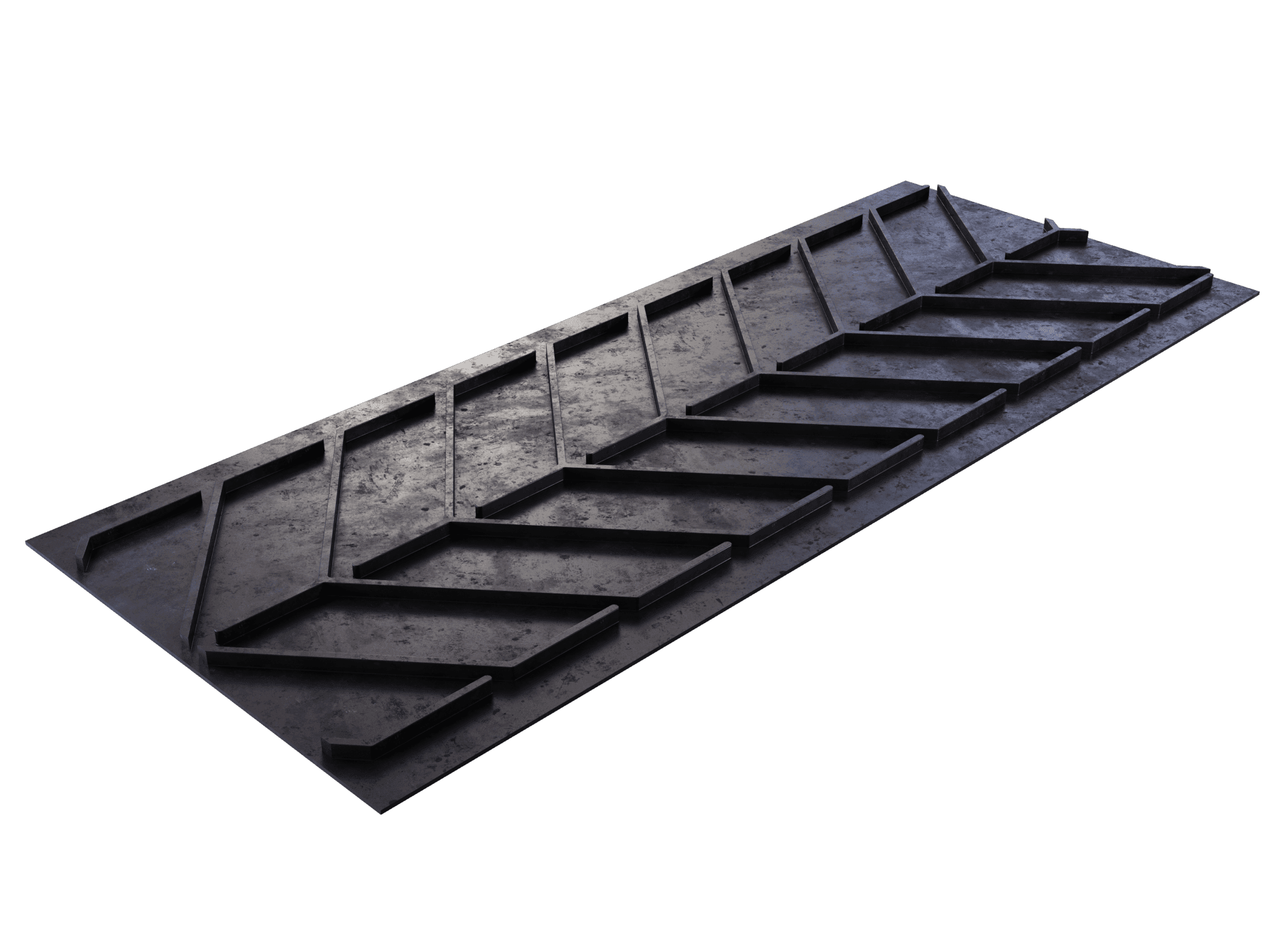

Beyond conveyor applications, we supply integrally molded belts for the following equipment.
Integrally molded belts designed for durable performance and efficient material handling.
48", 60", 72", 84"; larger custom widths require longitudinal splices
2-ply and 3-ply (220, 240, 330, 400)
Grade 1 (offered selectively, higher cost), Grade 2 (standard offering)
2-ply 150: 6" minimum head pulley; tighter cleat patterns, thicker base construction, and taller cleats increase the minimum pulley diameter requirement
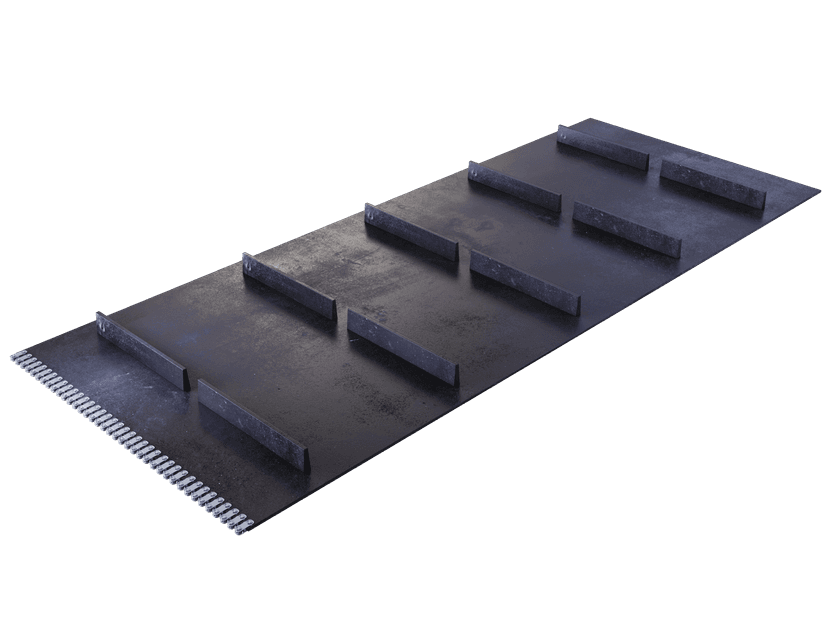
2–4" heights; 1/4–3/8" thick angles; flat bar cleats also available
Standard black, black oil-resistant, black high-heat resistant, black flame-retardant (FR), black high oil-resistant, and white oil and fat-resistant (FDA)
Bighorn, FabClimb (3-ply 225, 3/16" x 1/16") in 31", 23-1/2", and 17-1/4" pattern widths, Fablift, Longhorn, and beefy cleats; over 100 total configurations
Covered splice (top, bottom, or both); vulcanized endless (step splice); hot vulcanized endless splice; Flexco Meg Alloy 550 mechanical lace; Super-Screw® flexible lacing.
seamless molded durability.
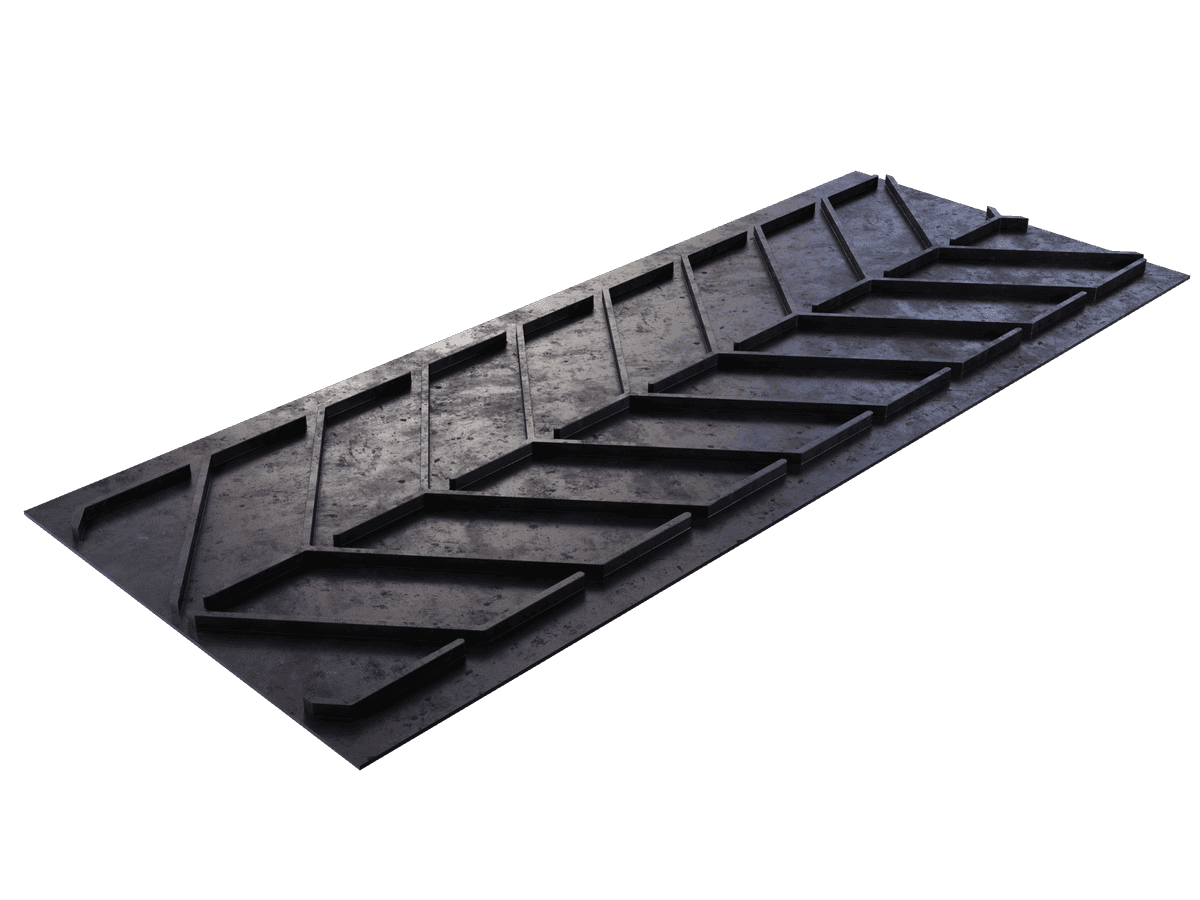
Heavy-duty integrally molded conveyor belts are built for the world's most extreme applications. The belt, cleats (or lugs), and cover are cured together, preventing the separation that occurs when uncured cleats are vulcanized to an already-cured belt. The result is a durable, endless belt surface that handles common feedstocks, including sand, stone, gravel, recycled asphalt product (RAP), and other heavy materials.
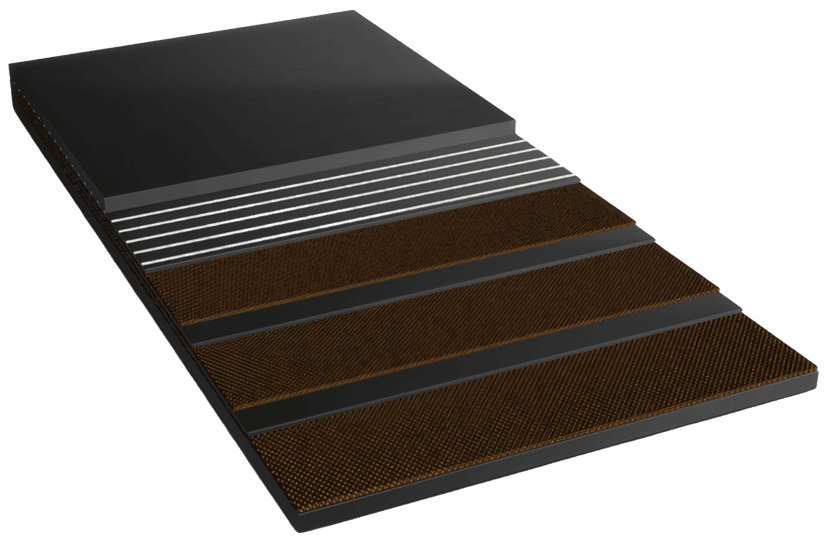
Heavy-duty integrally molded belts feature an industrial-grade synthetic fabric base, fortified with high-grade MOR (moderately oil-resistant) covers and cleats. Our belts feature a multi-ply design, with layers of synthetic fabrics (such as polyester or nylon) forming the belt carcass.
The core is encased in a tough, abrasion-resistant rubber compound (a high-grade nitrile or specialized oil-resistant compound). The cleats are molded directly into the belt, creating a single, seamless unit that resists gouging, puncturing, and impact.
Integrally molded belts are the right choice when three conditions overlap: high-impact or abrasive material streams, steep incline profiles that demand molded-in cleats, and operating environments where mechanically fastened cleats would fatigue or detach. Typical applications include asphalt milling, mobile shredding, mobile screening, stone slingers, cold planers, and aggregate handling.
Radial stackers, slider beds, trough idlers, and other belt conveyors use integrally molded belts to handle loose materials, extreme temperatures, and abrasive feedstocks.
If the belt runs horizontally or low-incline and the material stream is not highly abrasive, a cleated belt is typically the better specification and costs less.
Mines and quarries
Recycling and waste management
Energy and biofuel
Construction and demolition
Food processing
Foundries and metalworks
Wood chips
Aggregates (sand, rock, dirt)
Abrasive food products (nut shells, sugar, salt)
Cement (raw materials and mixed)
Construction materials
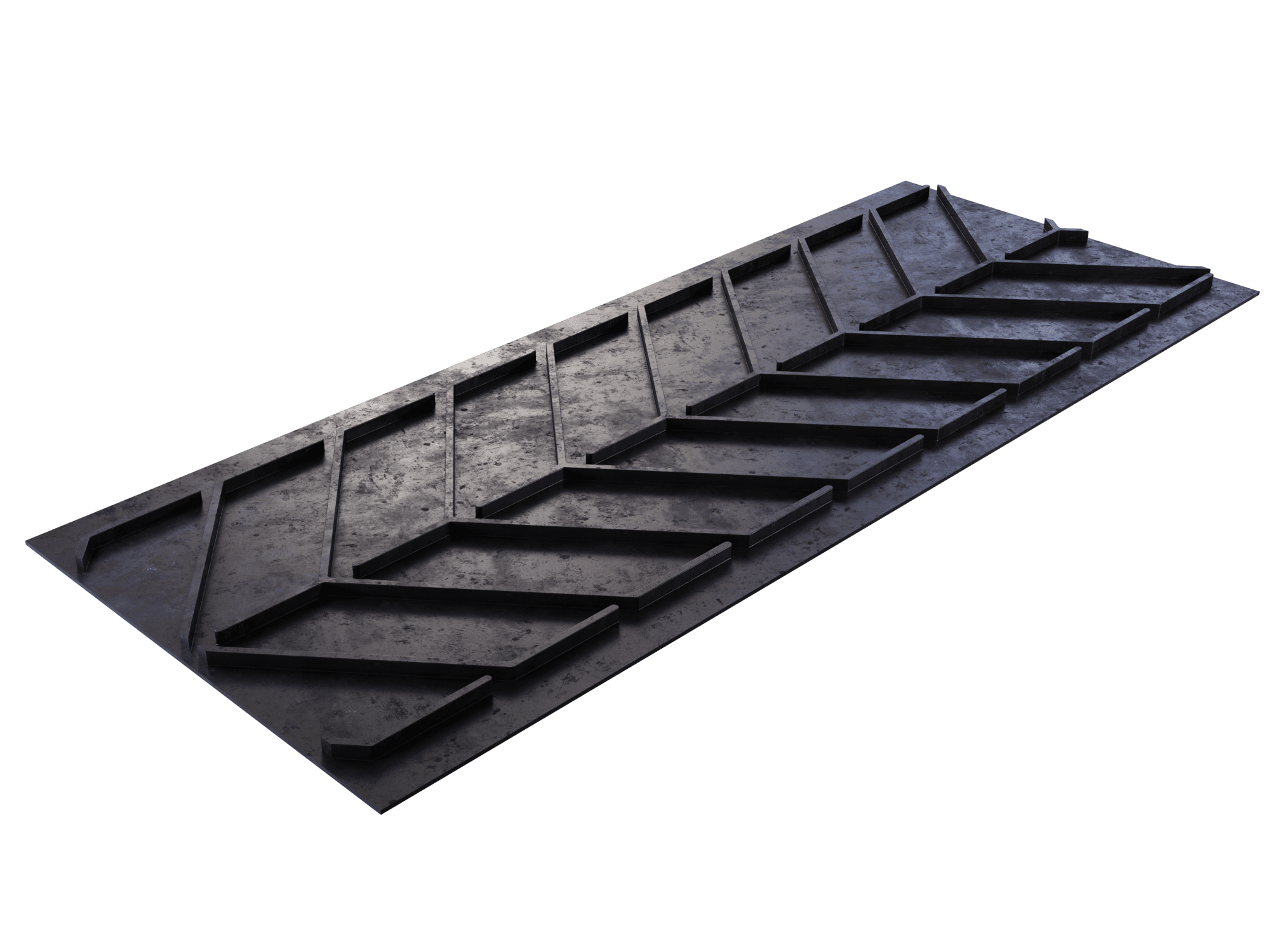
To quote an integrally molded belt, provide the following. If you're not sure of any spec, chat with our engineering team, and we'll help you figure it out.
For help selecting the right configuration, see our guide on how to choose the correct conveyor belt.

Fluent designs and builds custom conveyors for the most demanding environments. When you source an integrally molded belt from Fluent, you're working with engineers who specify, install, and troubleshoot these belts every day.
Ready to work with the experts?