




Copyright © 2025 Fluent Conveyors, LLC. All right reserved
Fluent Conveyors logo is a registered trademarks of Fluent Conveyors, LLC. Serial Number 97664258 Registered on Dec. 12, 2023


Copyright © 2025 Fluent Conveyors, LLC. All right reserved
Fluent Conveyors logo is a registered trademarks of Fluent Conveyors, LLC. Serial Number 97664258 Registered on Dec. 12, 2023


Not all belts can be configured with every option.
Black standard high abrasion resistant (SBR) rubber, black heat resistant (HR) rubber, black moderately oil resistant (MOR) and super oil resistant (SOR) rubber, white FDA rubber, black flame retardant (FR) rubber, and other compounds meeting specific DIN standards
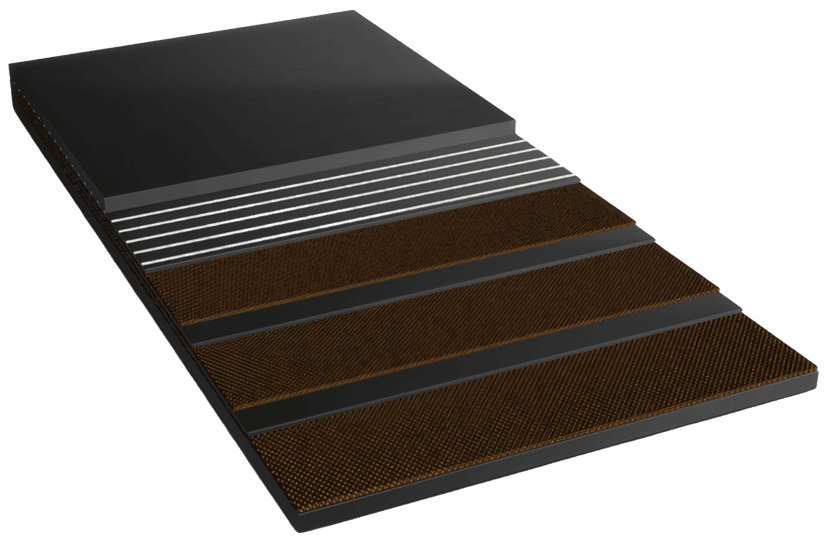
Monofilament cross-rigid ply, fiberglass cross-rigid ply (limited availability), and steel (wire mesh) breaker cross-rigid ply for high-tension applications
Black standard, black oil resistant, black high heat resistant, black high oil resistant, black flame retardant (FR), and white oil and fat resistant (FDA) compounds. FDA cleats limited to 36-inch max belt width with sidewalls no taller than 5 inches
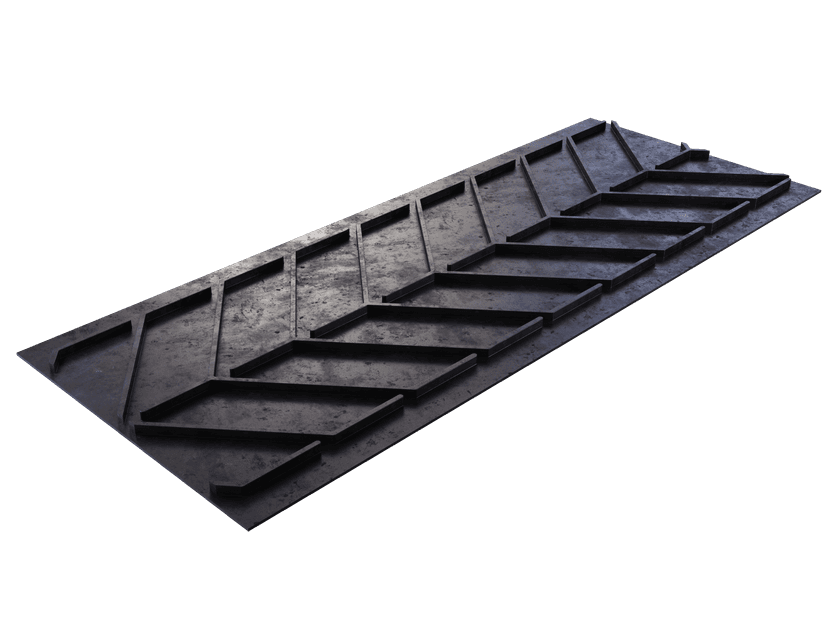
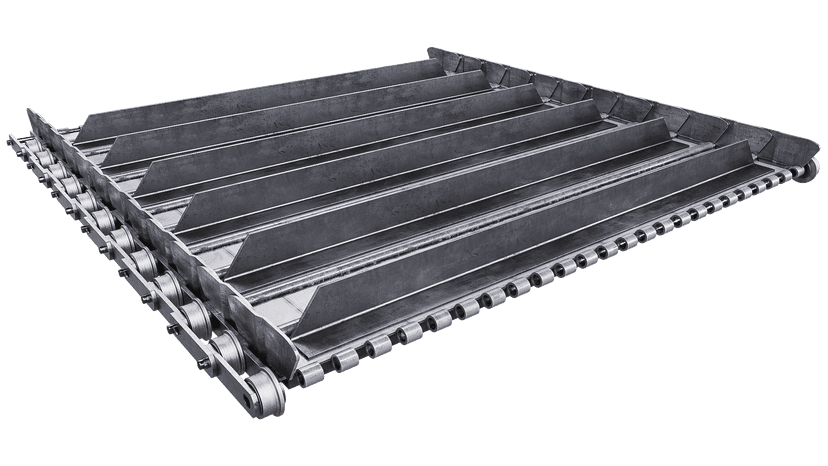
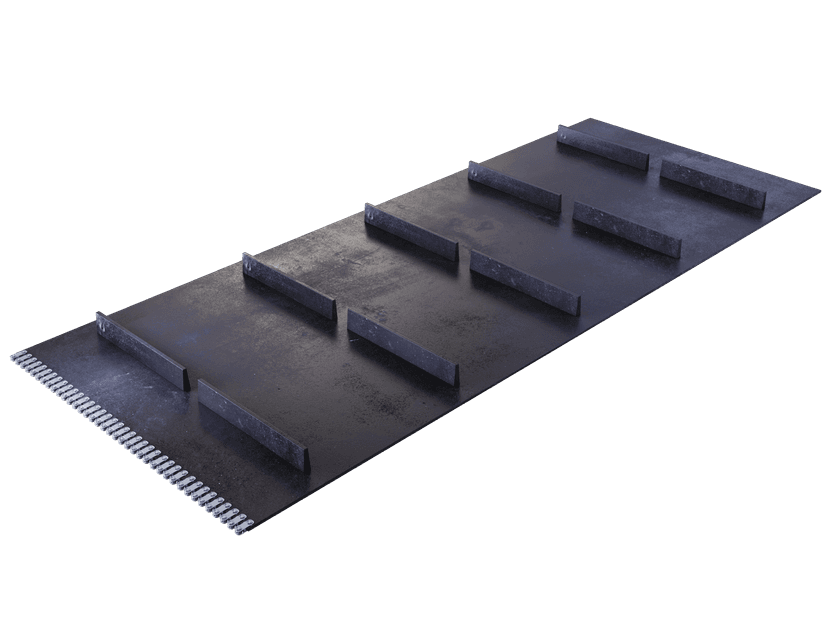
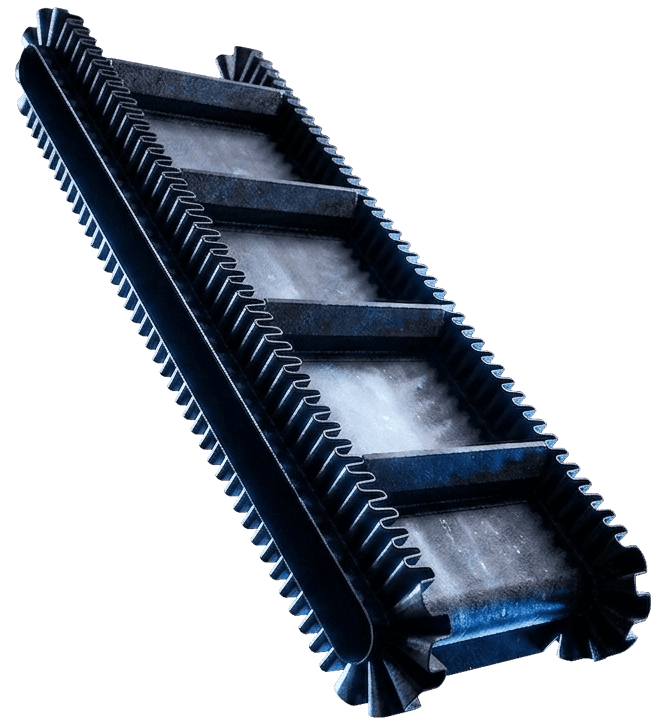
Straight "I" cleats, scoop "C" cleats, combination "S" cleats, HD nub, steep climb, smooth top, chevron, and dual pocket with longitudinal splice. Replaceable urethane cleat blades available
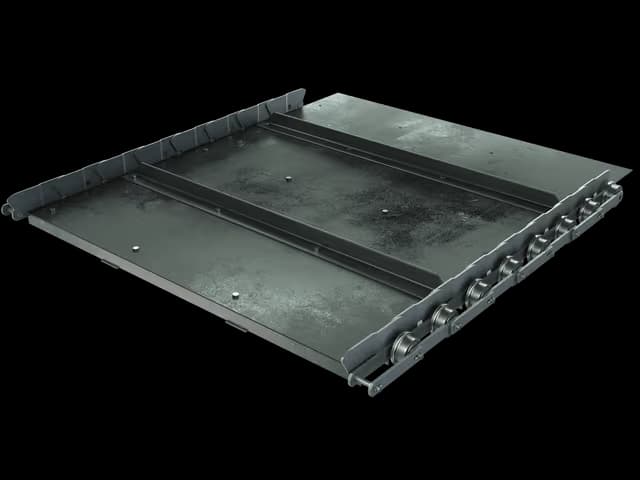
Spill plates (mild steel, stainless, or UHMW), bolted cleats, flame retardant cleat blades
1 inch (25 mm) up to 16 inches (400 mm)
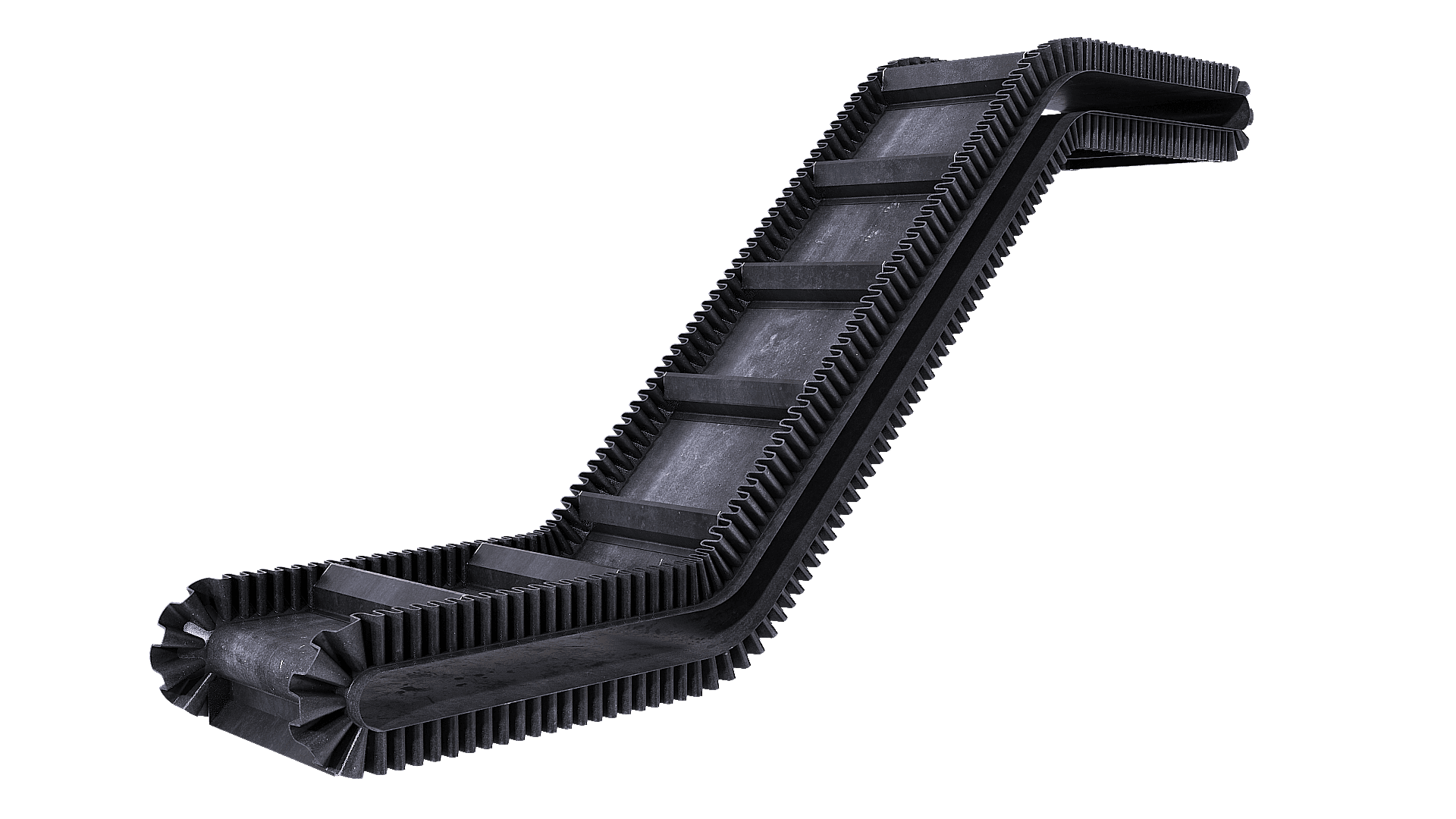
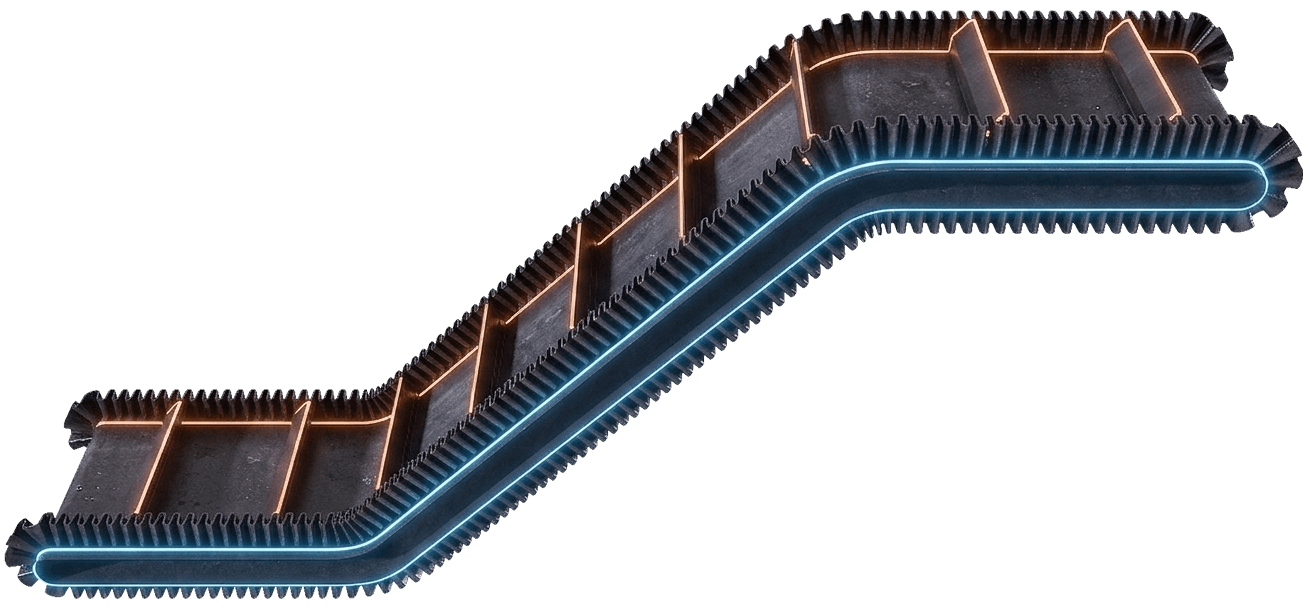
Horizontal, incline, incline with nose-over, curve-up with incline, and curve-up with incline and nose-over
Longitudinal vulcanized, diagonal vulcanized, finger vulcanized, step vulcanized, hidden vulcanized, endless, super screw, bolt plate and hinged, rivet plate and hinged, alligator, and clipper
Store indoors. Best if installed within 1 year of manufacture
sidewall belt performance.
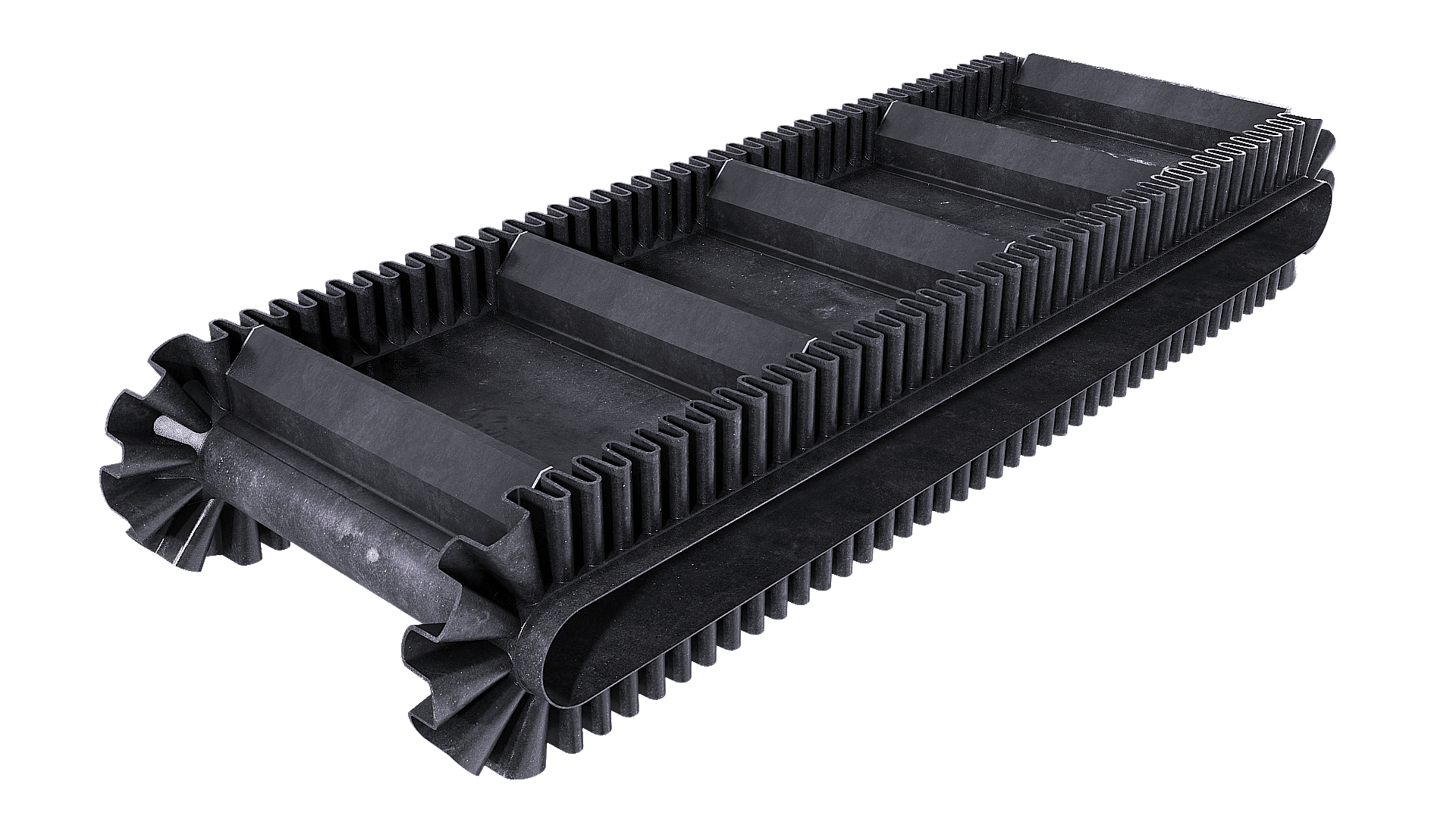
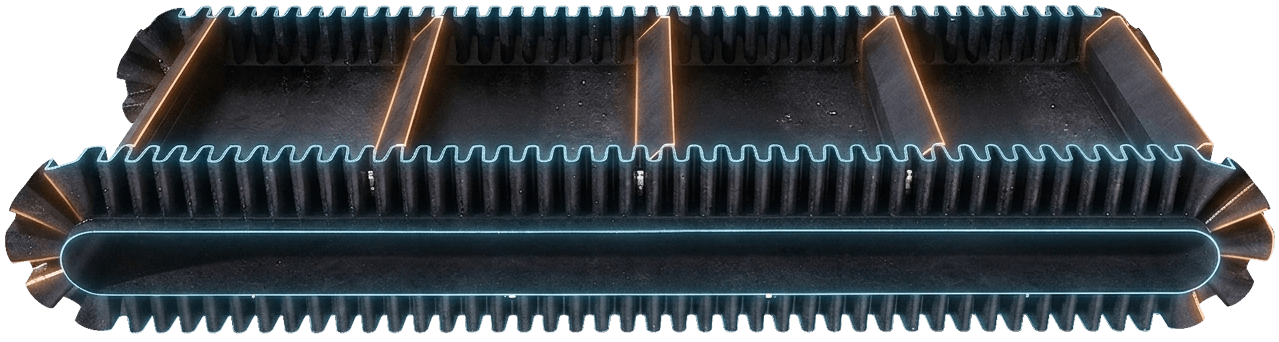
Corrugated sidewall conveyor belts carry hot-vulcanized rubber walls along both belt edges with cleats between them. The corrugation allows the walls to flex longitudinally through curve-ups and nose-overs without gapping, which holds material on the belt through angle changes and reduces the need for transfer points. The cross-rigid construction gives the belt lateral stiffness while preserving linear flexibility, so loads stay centered on steep inclines up to vertical.
Our corrugated sidewall belts include the following features:
Hot-vulcanized sidewalls and cleats for maximum bond strength and resistance to separation
Cross-rigid construction for lateral stiffness through incline and nose-over angles
Replaceable urethane cleat blades that restore carrying capacity over the belt's service life
Fiber-loaded sidewall compounds that reduce cracking at high flex points
Chemglazed belt edges available for chemical, wastewater, and saturated material handling
Multiple splice options: longitudinal vulcanized, diagonal vulcanized, finger vulcanized, step vulcanized, super screw, and bolt or rivet hinged plate
Compatible with belt scrapers and brushes when specified with super screw splicing
Sidewall heights from 1 inch (25 mm) up to 16 inches (400 mm)
Sidewall belt conveyors transport, infeed, and meter loose, saturated, and chemically aggressive materials across a wide range of heavy industries.
Wood chips
Aggregates (sand, rock, dirt)
Cement (raw materials and mixed)
Sludge
Choose your ply yarn based on belt tension requirements:
Polyester monofilament cross-rigid ply: for tension demands of 150–220 pounds per inch of width (PIW)
Fiberglass cross-rigid ply: for tension demands of 330–550 PIW
Steel breaker cross-rigid ply: for the highest-tension applications and heaviest-duty environments
Non-cross-rigid options are available for horizontal and low-angle applications where lateral stiffness is less critical.
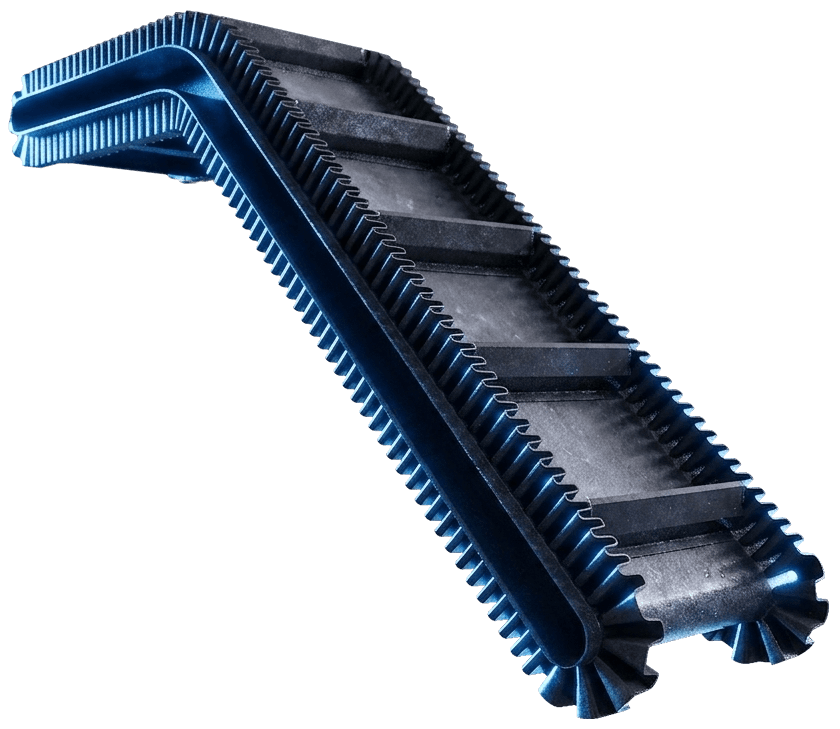
Sidewall belts are the leading solution for steep incline and vertical lift applications because they replace multi-conveyor transfer systems with a single continuous run. They reduce capital cost for high-lift systems, offer flexible frame configurations, and eliminate transfer-point maintenance.
But they do require some trade-offs:
Sidewall belts run at a lower capacity per belt-width than the trough idler belt
They require larger pulley diameters than flat belts
Carryback management on the return side requires attention when handling sticky or wet materials
Corrugated sidewall belts are sized to the material and the frame, not to standard part numbers. The following engineering rules drive the belt specification.

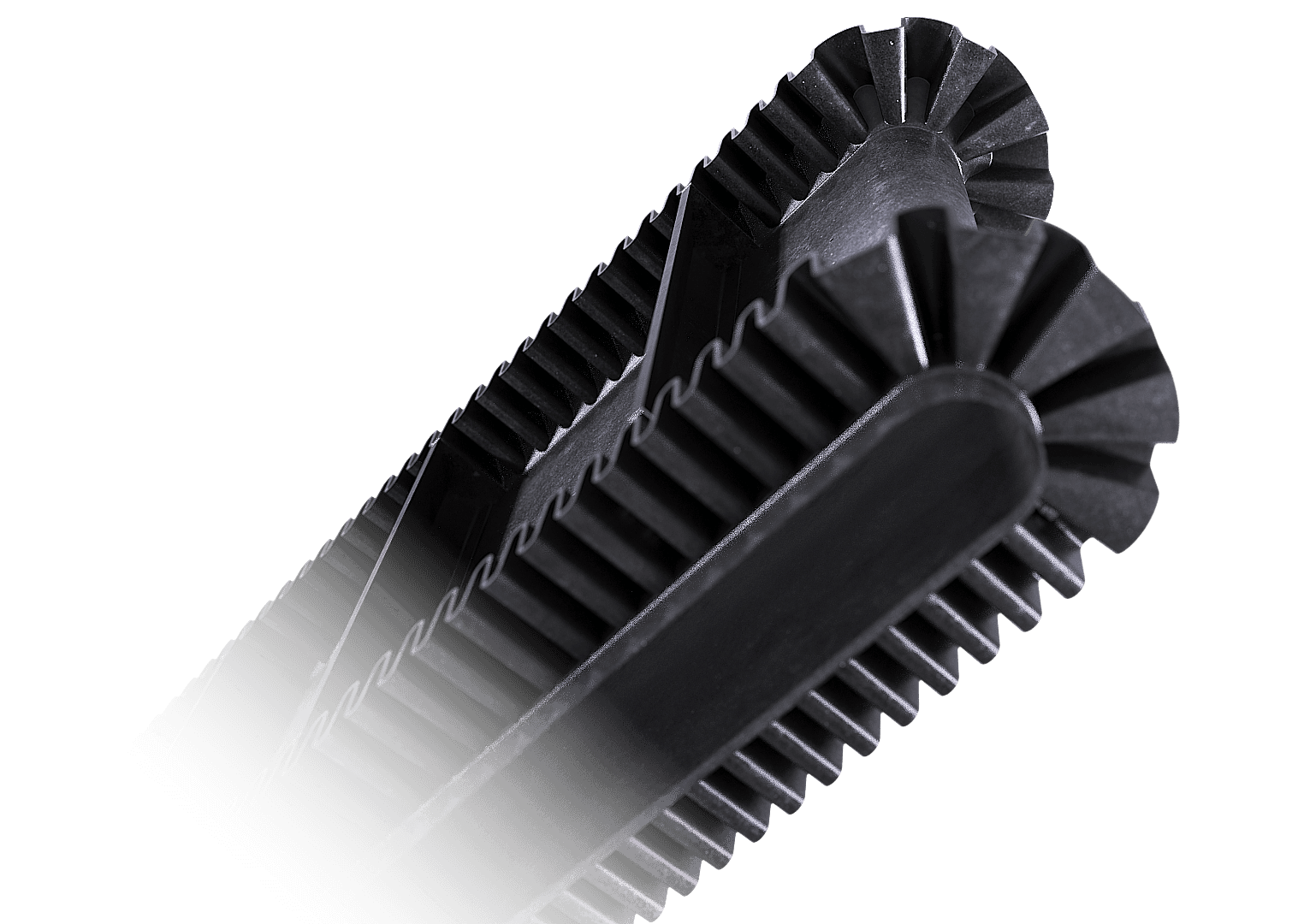
Flush sidewalls, smooth top: sidewalls mounted at the belt edge with no cleats, used on horizontal runs and minimal-angle applications with no curve-ups or nose-overs
Flush sidewalls with cleats: cleats between the sidewalls for steep straight inclines with no curve-ups or nose-overs
Recessed sidewalls: the most common configuration, with sidewalls set back from the belt edge for conveyors with curve-ups and nose-overs. Minimum recess equals 10% of the base belt width plus the sidewall height
The belt width should be at least 4 times the sidewall height to avoid top-heavy loading and unstable travel.
The face width (inside dimension between the sidewalls) should be at least 2 times the largest lump size in the material stream, which prevents bridging and entrapment.
Center-to-center cleat spacing should be at least 2 times the largest piece of material, also to prevent bridging. Cleats should match the inside wall of the corrugated area so material does not wedge between the cleat and the sidewall.
Cleat height must be at least 0.5 inch lower than the sidewall height. This prevents cleats from jamming against external chutes on the frame and, on belts 24 inches wide or narrower, prevents cleats from striking and damaging return idlers.
Cleat height must also match the material load:
Minimum 75% of the largest material height for standard inclines
Minimum 150% of the largest material height when the incline angle is 75 degrees or greater
When ordering a corrugated sidewall replacement belt, provide the following specifications. If you're unsure of any details, chat with our engineering team.
Get in touch with us if you need help picking the right belt or choosing the right belt size.
Belt length (total circumference)
Base belt width (overall)
Face width (inside dimension between sidewalls)
Ply count and tension rating (PIW)
Base belt compound
Sidewall height
Sidewall recess from belt edge (if applicable)
Sidewall compound
Cleat style (I, C, S, HD nub, steep climb, smooth top, chevron)
Cleat height
Cleat spacing (center to center)
Cleat compound
Replaceable urethane blades (yes/no)
Frame profile (horizontal, incline, incline with nose-over, curve-up, curve-up with nose-over)
Incline angle
Head and tail pulley diameters
Belt speed
Material type
Largest lump or piece size
Bulk density
Moisture or chemical content
Temperature range
Splice type (vulcanized, super screw, bolt plate, rivet plate, alligator)
Number of splices (endless vs. field-spliceable)

Fluent designs and builds custom conveyors for recycling, aggregates, agriculture, and other demanding industries. When you buy from us, you work with engineers who specify, install, and service these belts on real conveyor systems every day.
Vulcanized sidewall construction that bonds walls and cleats directly to the base belt
Cross-rigid ply options from monofilament through steel breaker to match tension demand from 150 to 2,000+ PIW
Sidewall heights from 1 inch to 16 inches, matched to material size and incline angle
Chemglazed edges, FDA compounds, flame retardant options, and replaceable urethane blades available on request
Made to order in 2–5 weeks based on belt configuration and splice requirements
Ready to work with the experts?