









Copyright © 2026 Fluent Conveyors, LLC. All right reserved

Fluent Conveyors logo is a registered trademarks of Fluent Conveyors, LLC. Serial Number 97664258 Registered on Dec. 12, 2023


Copyright © 2026 Fluent Conveyors, LLC. All right reserved
Fluent Conveyors logo is a registered trademarks of Fluent Conveyors, LLC. Serial Number 97664258 Registered on Dec. 12, 2023
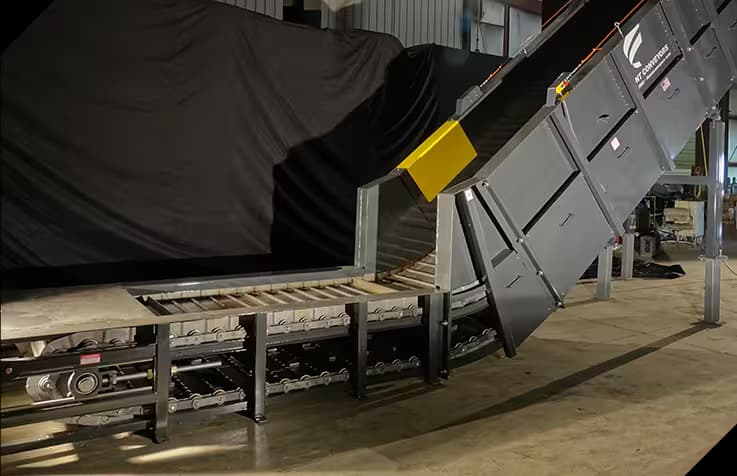
Proper floor assessment forms the foundation for successful conveyor installation. Uneven or non-level floors create installation challenges, operational inefficiencies, and premature equipment wear. Comprehensive floor evaluation identifies and addresses issues before they impact your conveyor system

Floor flatness and levelness directly affect conveyor performance. Industry statistics show floor assessments can help:
Floor flatness measures the degree of bumpiness in concrete surfaces. For conveyor systems, FF ratings typically range from:
Poor flatness causes vibration in conveyor systems, increases maintenance requirements, and shortens component lifespan.
Floor levelness evaluates the degree of slope across an area. Conveyor installations require the following tolerances:
Improper levelness causes conveyor systems to work against gravity, increasing energy consumption and creating uneven stress on components.
Floor assessments follow ASTM E1155 standards, which provide the methodology for evaluating flatness and levelness. ASTM E1155 compliance assessments:
Conducting a floor assessment prior to conveyor installation ensures a stable foundation, accurate alignment, and long-term system reliability. By evaluating floor conditions, load capacity, and levelness in advance, potential risks such as uneven wear, misalignment, and costly adjustments can be avoided.
Floor assessment helps verify compliance with Americans with Disabilities Act (ADA) standards. Proper assessment prevents potential litigation concerning accessibility by documenting slope transitions and overall facility access compliance. These documented measurements serve as evidence of regulatory adherence and help identify areas requiring correction before conveyor installation.


Floor flatness and levelness reports typically range from $0.05 to $0.15 per square foot.
The final cost depends on required accuracy, reporting format, and facility size.
For large industrial spaces, average project costs range from $10,000 to $75,000—a fraction of potential rework expenses for poorly installed conveyor systems.


Timing floor evaluations correctly maximizes their value.
Assessments should occur before finalizing conveyor system design and after concrete has cured but before equipment installation.
Additional evaluations are recommended when retrofitting existing facilities for new conveyor systems or during facility expansion planning.


Modern floor assessment utilizes an array of advanced technologies including laser scanning equipment, F-meter devices, digital inclinometers, and 3D modeling integration.
These technologies produce detailed reports and heat maps highlighting areas requiring attention before conveyor installation.
The visual data helps installation teams address floor issues proactively rather than discovering problems during conveyor setup.